1. Matterhorn, Zermatt – Switzerland’s Most Iconic Mountain
Hero Image Suggestion
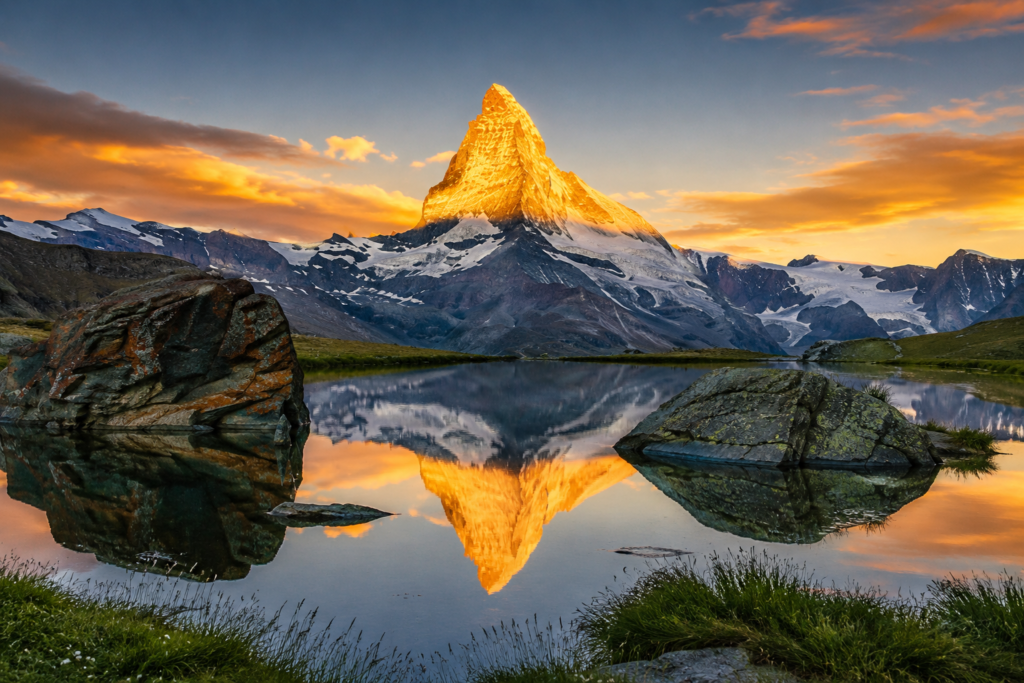
A sunrise view of the Matterhorn reflected in Stellisee Lake, with golden light illuminating the snow-covered peak.
Quick Facts
| Detail | Information |
|---|---|
| Location | Zermatt, Valais, Switzerland |
| Elevation | 4,478 m (14,692 ft) |
| Best Time to Visit | June–September (hiking), December–March (skiing) |
| Time Needed | 2–3 Days |
| Entry Fee | Free (transport and cable cars are extra) |
| Family Friendly | Yes |
| Wheelchair Accessible | Partially (Gornergrat Railway and many viewpoints) |
| Best For | Nature lovers, photographers, hikers, skiers, couples |
Why Visit the Matterhorn?
The Matterhorn is more than just Switzerland’s most recognizable mountain—it is a symbol of the Swiss Alps. Its dramatic pyramid-shaped peak rises high above the charming alpine village of Zermatt, creating one of the most photographed landscapes in the world.
Whether you’re watching the sunrise paint the mountain in shades of gold, riding a scenic railway to panoramic viewpoints, or enjoying a peaceful walk through alpine meadows, every moment around the Matterhorn feels unforgettable.
Complete Description
Standing at 4,478 meters, the Matterhorn is one of Europe’s most famous mountains and attracts visitors from around the world throughout the year.
During summer, the surrounding valleys are covered with wildflowers, green meadows, and crystal-clear lakes that perfectly reflect the mountain. Hiking trails range from easy scenic walks to challenging alpine routes, making the region suitable for every type of traveler.
Winter transforms Zermatt into one of the world’s premier ski destinations. Snow-covered slopes, luxury chalets, and cozy mountain restaurants create a magical alpine atmosphere.
Unlike many mountain resorts, Zermatt is largely car-free, allowing visitors to enjoy fresh mountain air and peaceful surroundings.
Best Things to Do
- Ride the Gornergrat Railway for spectacular panoramic views.
- Visit Matterhorn Glacier Paradise, Europe’s highest cable car station.
- Hike to Stellisee Lake for the famous Matterhorn reflection.
- Explore Zermatt’s charming village streets and boutiques.
- Enjoy skiing or snowboarding during winter.
- Try traditional Swiss cheese fondue at a mountain restaurant.
- Ride scenic cable cars across the Alps.
- Photograph sunrise and sunset over the Matterhorn.
Best Time to Visit
Summer (June–September)
- Pleasant temperatures
- Perfect for hiking
- Beautiful alpine flowers
- Excellent visibility
Winter (December–March)
- World-class skiing
- Snow-covered scenery
- Christmas atmosphere
- Luxury winter experiences
Autumn (September–October)
- Fewer crowds
- Golden landscapes
- Crisp mountain air
- Great photography conditions
Photography Tips
- Visit Stellisee Lake early in the morning for perfect reflections.
- Sunrise offers the most dramatic lighting.
- Bring a wide-angle lens for landscapes.
- A telephoto lens helps capture mountain details.
- Carry spare batteries, as cold weather drains them quickly.
- Drones are subject to local regulations and restricted in some alpine areas, so always check current rules before flying.
How to Reach
From Zurich
- Train to Zermatt (approximately 3.5–4 hours).
From Geneva
- Train to Zermatt (approximately 4 hours).
From Milan
- Travel via Brig by train (approximately 3.5–4 hours).
Since Zermatt is a car-free village, visitors park their vehicles in Täsch and continue by shuttle train.
Nearby Attractions
- Gornergrat
- Matterhorn Glacier Paradise
- Stellisee Lake
- Sunnegga
- Schwarzsee
- Five Lakes Walk
Travel Tips
- Purchase mountain railway tickets in advance during peak season.
- Carry warm clothing even during summer, as temperatures drop at higher elevations.
- Wear comfortable hiking shoes with good grip.
- Stay at least two nights to fully experience the region.
- Start outdoor activities early to avoid afternoon clouds.
Pros & Cons
Pros
- One of the world’s most beautiful mountain landscapes.
- Excellent hiking and skiing opportunities.
- Outstanding public transportation.
- Safe, clean, and family-friendly.
Cons
- Expensive accommodation and dining.
- Peak season can be crowded.
- Weather can change rapidly in the mountains.
Who Should Visit?
✔ Couples seeking a romantic alpine escape
✔ Families looking for scenic outdoor adventures
✔ Solo travelers who enjoy hiking and photography
✔ Adventure enthusiasts interested in skiing and mountaineering
✔ Luxury travelers seeking premium alpine resorts
✔ Nature photographers chasing iconic Swiss landscapes
Personal Recommendation
If you only have time to visit one mountain destination in Switzerland, make it the Matterhorn. Its breathtaking scenery, world-class outdoor activities, and unforgettable alpine atmosphere capture the essence of Switzerland better than almost anywhere else. Spending two or three days in Zermatt allows you to experience spectacular viewpoints, scenic rail journeys, and peaceful mountain walks that will remain among the highlights of your trip.
2. Jungfraujoch – Top of Europe
Hero Image Suggestion
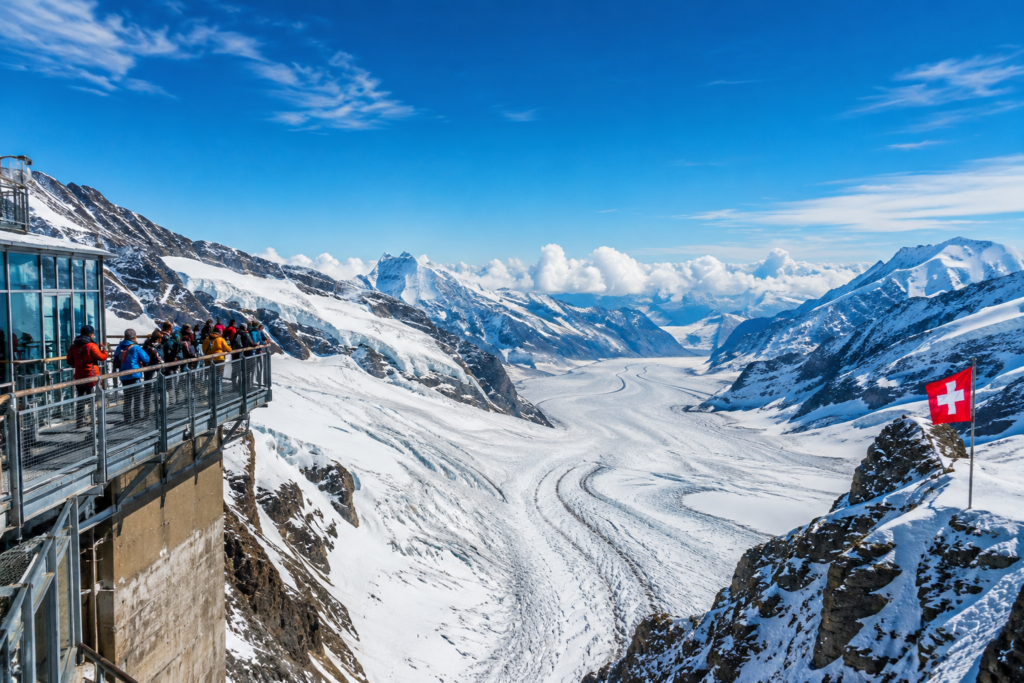
A panoramic view from the Jungfraujoch observation deck overlooking the Aletsch Glacier, surrounded by snow-capped peaks under a bright blue sky.
Quick Facts
| Detail | Information |
|---|---|
| Location | Bernese Oberland, Switzerland |
| Elevation | 3,454 m (11,332 ft) |
| Best Time to Visit | May–October for clear views; December–March for winter scenery |
| Time Needed | Full Day |
| Entry Fee | Paid (Jungfrau Railway tickets required) |
| Family Friendly | Yes |
| Wheelchair Accessible | Yes (most attractions are accessible) |
| Best For | Families, photographers, couples, snow lovers |
Why Visit Jungfraujoch?
Nicknamed the “Top of Europe,” Jungfraujoch offers one of the highest and most spectacular railway experiences on the continent. From breathtaking glacier views and year-round snow to fascinating ice sculptures and panoramic observation decks, it is one of Switzerland’s most unforgettable destinations.
Whether it’s your first visit to the Swiss Alps or your tenth, the experience of standing above the clouds at over 3,400 meters is simply unforgettable.
Complete Description
Jungfraujoch sits between the famous peaks of Jungfrau and Mönch in the heart of the Swiss Alps. It is reached via the historic Jungfrau Railway, an engineering masterpiece that travels through tunnels carved inside the mountains.
The journey itself is part of the adventure. Large panoramic windows reveal stunning alpine landscapes, waterfalls, forests, and picturesque villages before the train climbs into a world of snow and ice.
At the summit, visitors can walk through an enchanting Ice Palace, admire Europe’s longest glacier from observation platforms, enjoy restaurants with panoramic views, and even play in the snow during summer.
Because of its high altitude, weather conditions can change quickly, making every visit unique.
Best Things to Do
- Ride the famous Jungfrau Railway.
- Visit the Sphinx Observatory for 360-degree mountain views.
- Explore the Ice Palace carved into the glacier.
- Walk across the Alpine Sensation exhibition.
- Enjoy panoramic views of the Aletsch Glacier.
- Experience snow activities even during summer.
- Dine at mountain restaurants overlooking the Alps.
- Shop for Swiss souvenirs at Europe’s highest railway station.
Best Time to Visit
Summer (May–September)
- Pleasant temperatures
- Clear hiking trails
- Longer daylight hours
- Excellent mountain visibility
Winter (December–March)
- Magical snow-covered scenery
- Winter sports nearby
- Festive alpine atmosphere
- Incredible glacier landscapes
Shoulder Season (April & October)
- Smaller crowds
- Cooler weather
- Better hotel prices
- Beautiful mountain scenery
Morning visits usually provide the clearest skies before clouds develop later in the day.
Photography Tips
- Visit early in the morning for the best visibility.
- Use a polarizing filter to reduce glare from snow.
- Carry sunglasses to protect your eyes from bright reflections.
- Keep your camera batteries warm in cold weather.
- Capture both wide alpine landscapes and close-up glacier textures.
- Smartphones perform well, but avoid rapid temperature changes to prevent lens fogging.
How to Reach
From Interlaken
Travel by train to Lauterbrunnen or Grindelwald before connecting to the Jungfrau Railway.
Approximate journey: 2–2.5 hours
From Zurich
Train to Interlaken, followed by the Jungfrau Railway.
Approximate journey: 4 hours
From Lucerne
GoldenPass route to Interlaken, then continue by train.
Approximate journey: 3.5–4 hours
Booking train tickets in advance is highly recommended, especially during summer.
Nearby Attractions
- Interlaken
- Grindelwald
- Lauterbrunnen Valley
- Kleine Scheidegg
- Wengen
- Harder Kulm
- First Cliff Walk
Travel Tips
- Book the earliest train for the clearest weather.
- Dress in warm layers, even during summer.
- Drink plenty of water to reduce the effects of high altitude.
- Check the mountain weather forecast before traveling.
- Reserve tickets online during peak tourist season.
- Consider purchasing the Swiss Travel Pass or Jungfrau Travel Pass for potential savings.
Pros & Cons
Pros
- One of Europe’s most scenic train journeys.
- Incredible glacier and mountain views.
- Year-round snow experience.
- Excellent facilities and accessibility.
Cons
- Railway tickets are expensive.
- Weather can limit visibility.
- Popular destination with large crowds during peak season.
Who Should Visit?
✔ Families looking for an unforgettable alpine adventure
✔ Couples seeking breathtaking mountain scenery
✔ Solo travelers exploring Switzerland by train
✔ Photography enthusiasts
✔ Nature lovers
✔ First-time visitors wanting to experience the Swiss Alps
Personal Recommendation
Jungfraujoch deserves a place on every Switzerland itinerary. While the ticket price is higher than many other attractions, the combination of an iconic railway journey, spectacular glacier landscapes, and year-round snow creates an experience unlike anywhere else in Europe. If your budget allows, dedicate a full day to exploring this remarkable alpine destination—it will likely become one of the highlights of your Swiss adventure.
3. Lucerne – Switzerland’s Fairytale Lakeside City
Hero Image Suggestion
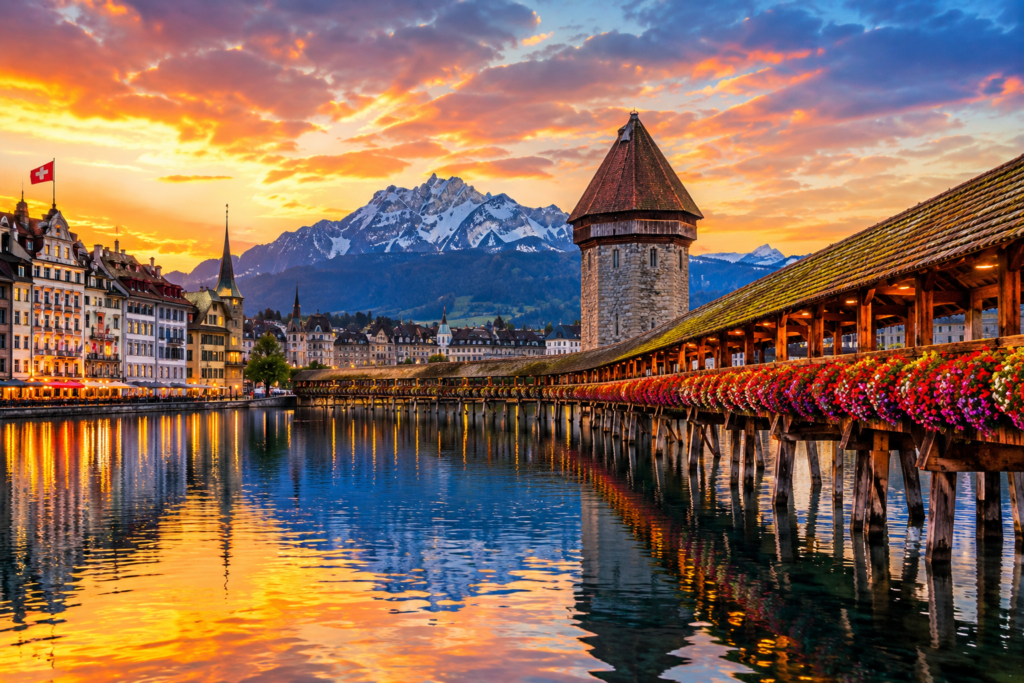
A panoramic view of Chapel Bridge with the Water Tower, colorful flower boxes, and the snow-capped Alps reflected in the calm waters of Lake Lucerne during sunset.
Quick Facts
| Detail | Information |
|---|---|
| Location | Central Switzerland |
| Elevation | 435 m (1,427 ft) |
| Best Time to Visit | April–October |
| Time Needed | 2 Days |
| Entry Fee | Free to explore the Old Town (some attractions require tickets) |
| Family Friendly | Yes |
| Wheelchair Accessible | Most major attractions are accessible |
| Best For | Families, couples, photographers, history lovers |
Why Visit Lucerne?
Lucerne is often described as the most beautiful city in Switzerland, and it’s easy to understand why. Nestled beside a sparkling lake and surrounded by majestic mountains, the city combines medieval charm with breathtaking natural scenery.
Whether you’re strolling through the historic Old Town, cruising across Lake Lucerne, or riding a cable car to nearby mountain peaks, Lucerne offers the perfect balance of culture, history, and outdoor adventure.
Complete Description
Situated on the shores of Lake Lucerne, this charming city is famous for its colorful buildings, cobblestone streets, and iconic Chapel Bridge—the oldest covered wooden bridge in Europe.
The city’s well-preserved medieval architecture creates a storybook atmosphere, while lively cafés, boutique shops, and waterfront promenades make it an enjoyable destination throughout the year.
One of Lucerne’s greatest attractions is its location. Within minutes, visitors can travel from the historic city center to spectacular mountain viewpoints like Mount Pilatus and Mount Rigi.
Whether you’re interested in history, scenic cruises, alpine adventures, or simply relaxing beside the lake, Lucerne offers something for every traveler.
Best Things to Do
- Walk across the famous Chapel Bridge.
- Visit the historic Water Tower.
- Explore Lucerne’s charming Old Town.
- See the moving Lion Monument.
- Take a scenic cruise on Lake Lucerne.
- Ride the world’s steepest cogwheel railway to Mount Pilatus.
- Visit Mount Rigi, known as the “Queen of the Mountains.”
- Shop for Swiss watches, chocolates, and souvenirs.
- Enjoy lakeside cafés with spectacular Alpine views.
Best Time to Visit
Spring (April–May)
- Pleasant weather
- Blooming flowers
- Fewer tourists
- Great sightseeing conditions
Summer (June–August)
- Warm temperatures
- Lake cruises
- Outdoor festivals
- Long daylight hours
Autumn (September–October)
- Beautiful autumn colors
- Comfortable temperatures
- Excellent photography
- Smaller crowds
Winter (December–February)
- Christmas markets
- Snow-covered mountains
- Festive atmosphere
- Easy access to nearby ski resorts
Photography Tips
- Visit Chapel Bridge early in the morning before the crowds arrive.
- Sunset creates beautiful reflections over Lake Lucerne.
- Capture panoramic views from Mount Pilatus or Mount Rigi.
- Use a wide-angle lens for cityscapes and mountain scenery.
- Explore the Old Town during the evening when historic buildings are beautifully illuminated.
How to Reach
From Zurich
Direct trains operate frequently.
Approximate travel time: 45–50 minutes
From Interlaken
Direct scenic trains connect both destinations.
Approximate travel time: 2 hours
From Geneva
High-speed rail services take approximately 3 hours.
Lucerne’s railway station is conveniently located within walking distance of the Old Town and Lake Lucerne.
Nearby Attractions
- Mount Pilatus
- Mount Rigi
- Lake Lucerne
- Swiss Museum of Transport
- Weggis
- Bürgenstock
- Stanserhorn
Travel Tips
- Purchase a Swiss Travel Pass if visiting multiple cities.
- Start sightseeing early to enjoy Chapel Bridge before it becomes busy.
- Consider taking an evening lake cruise for stunning sunset views.
- Comfortable walking shoes are recommended, as much of the Old Town is pedestrian-friendly.
- Sample authentic Swiss fondue or raclette at a traditional local restaurant.
Pros & Cons
Pros
- Beautiful combination of lake, mountains, and historic architecture.
- Easy to explore on foot.
- Excellent public transportation.
- Great base for day trips into the Swiss Alps.
Cons
- Hotels can be expensive during summer.
- Popular attractions become crowded in peak season.
- Dining near tourist areas may be costly.
Who Should Visit?
✔ Couples looking for a romantic getaway
✔ Families seeking a relaxed city break
✔ First-time visitors to Switzerland
✔ Photography enthusiasts
✔ History and architecture lovers
✔ Travelers wanting both city attractions and mountain adventures
Personal Recommendation
If you’re looking for one destination that perfectly represents Switzerland, Lucerne should be near the top of your list. The city’s blend of medieval history, breathtaking alpine scenery, crystal-clear lake, and world-class transportation makes it an ideal destination for travelers of all ages. Spending at least two days here allows you to experience both its cultural treasures and nearby mountain adventures without feeling rushed.
4. Interlaken – Switzerland’s Adventure Capital
Hero Image Suggestion
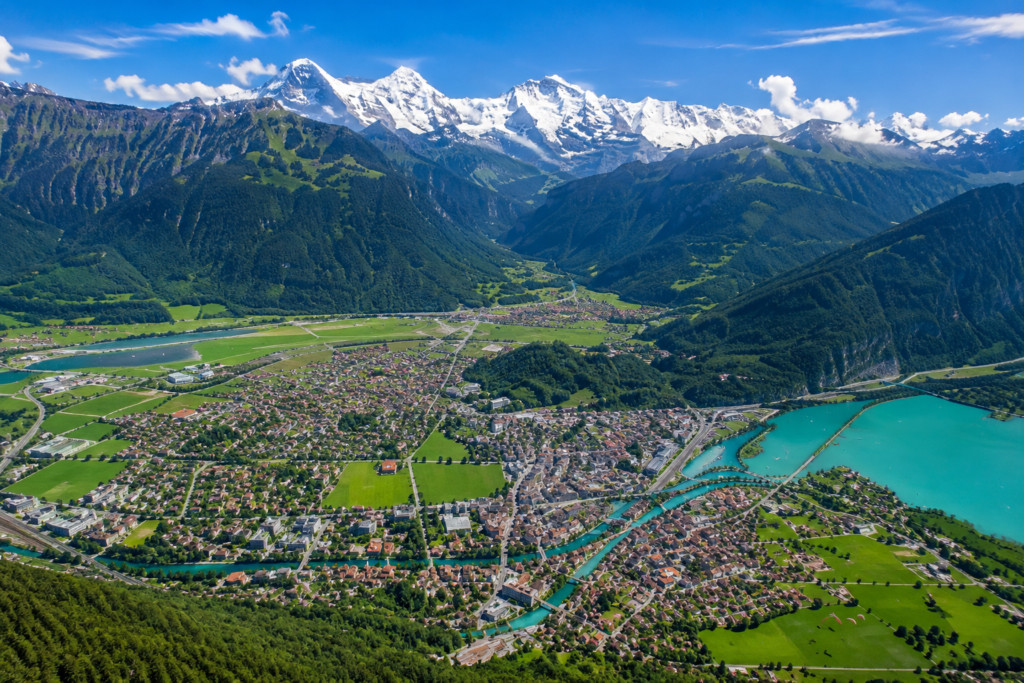
A panoramic aerial view of Interlaken nestled between Lake Thun and Lake Brienz, with the snow-capped Jungfrau mountains rising in the background.
Quick Facts
| Detail | Information |
|---|---|
| Location | Bernese Oberland, Switzerland |
| Elevation | 568 m (1,864 ft) |
| Best Time to Visit | May–October for outdoor activities; December–February for winter sports |
| Time Needed | 2–3 Days |
| Entry Fee | Free to explore the town (activities have separate fees) |
| Family Friendly | Yes |
| Wheelchair Accessible | Most public areas and attractions are accessible |
| Best For | Adventure seekers, couples, families, photographers |
Why Visit Interlaken?
Nestled between the crystal-clear waters of Lake Thun and Lake Brienz, Interlaken is one of Switzerland’s most exciting destinations. Surrounded by towering Alpine peaks, charming villages, and breathtaking lakes, it serves as the gateway to the famous Jungfrau region.
Whether you dream of paragliding over turquoise lakes, hiking through alpine meadows, cruising on scenic lakes, or simply relaxing while enjoying spectacular mountain views, Interlaken offers unforgettable experiences for every traveler.
Complete Description
Interlaken’s name literally means “between the lakes,” and the town lives up to its reputation with stunning natural beauty in every direction.
The charming streets are lined with cafés, souvenir shops, luxury hotels, and traditional Swiss restaurants. At the center of town lies Höhematte Park, a wide open green space where colorful paragliders gracefully land throughout the day, creating one of the town’s most iconic sights.
Beyond the town itself, Interlaken serves as the perfect base for exploring nearby destinations such as Grindelwald, Lauterbrunnen, Wengen, and Jungfraujoch.
Whether you’re seeking thrilling outdoor adventures or peaceful mountain escapes, Interlaken offers endless opportunities.
Best Things to Do
- Go paragliding above Interlaken.
- Take a scenic cruise on Lake Thun.
- Explore the turquoise waters of Lake Brienz.
- Visit Harder Kulm for panoramic mountain views.
- Ride the historic funicular railway.
- Enjoy hiking trails suitable for every fitness level.
- Experience canyoning or white-water rafting.
- Take day trips to Lauterbrunnen and Grindelwald.
- Shop for authentic Swiss chocolates and souvenirs.
Best Time to Visit
Spring (April–May)
- Blooming flowers
- Pleasant weather
- Fewer tourists
- Great hiking conditions
Summer (June–August)
- Peak adventure season
- Perfect weather for paragliding
- Scenic boat cruises
- Long daylight hours
Autumn (September–October)
- Colorful landscapes
- Comfortable temperatures
- Excellent photography opportunities
- Smaller crowds
Winter (December–February)
- Snow-covered scenery
- Ski resorts nearby
- Christmas atmosphere
- Winter hiking and sledding
Photography Tips
- Visit Harder Kulm during sunset for panoramic views.
- Capture the turquoise color of Lake Brienz on sunny days.
- Photograph paragliders landing at Höhematte Park.
- Early mornings provide calm lake reflections.
- Use a drone only where permitted and follow local regulations.
How to Reach
From Zurich
Direct train service.
Approximate travel time: 2 hours
From Lucerne
GoldenPass Express or regular train.
Approximate travel time: 2 hours
From Geneva
Train via Bern.
Approximate travel time: 3 hours
Interlaken has two railway stations:
- Interlaken Ost (East)
- Interlaken West
Both stations are well connected to the Jungfrau region.
Nearby Attractions
- Lauterbrunnen Valley
- Grindelwald
- Jungfraujoch
- Harder Kulm
- Lake Brienz
- Lake Thun
- Schynige Platte
- St. Beatus Caves
Travel Tips
- Stay at least two nights to explore nearby attractions.
- Book adventure activities in advance during summer.
- Carry a light waterproof jacket, as mountain weather changes quickly.
- Purchase a Swiss Travel Pass if visiting multiple destinations.
- Start outdoor activities early for the best weather and fewer crowds.
Pros & Cons
Pros
- Switzerland’s adventure sports capital.
- Excellent transport connections.
- Stunning mountain and lake scenery.
- Ideal base for exploring the Bernese Oberland.
Cons
- Adventure activities can be expensive.
- Peak summer season attracts large crowds.
- Accommodation prices are higher during holidays.
Who Should Visit?
✔ Adventure enthusiasts
✔ Couples seeking scenic escapes
✔ Families with older children
✔ Solo travelers
✔ Nature lovers
✔ Photography enthusiasts
✔ First-time visitors exploring the Swiss Alps
Personal Recommendation
Interlaken is one of the best places to experience the adventurous side of Switzerland. Even if you don’t plan on paragliding or rafting, the spectacular scenery, beautiful lakes, and easy access to the surrounding Alpine villages make it a destination worth spending several days exploring. If you’re building your first Switzerland itinerary, Interlaken should definitely be included.
5. Lauterbrunnen Valley – Switzerland’s Valley of 72 Waterfalls
Hero Image Suggestion
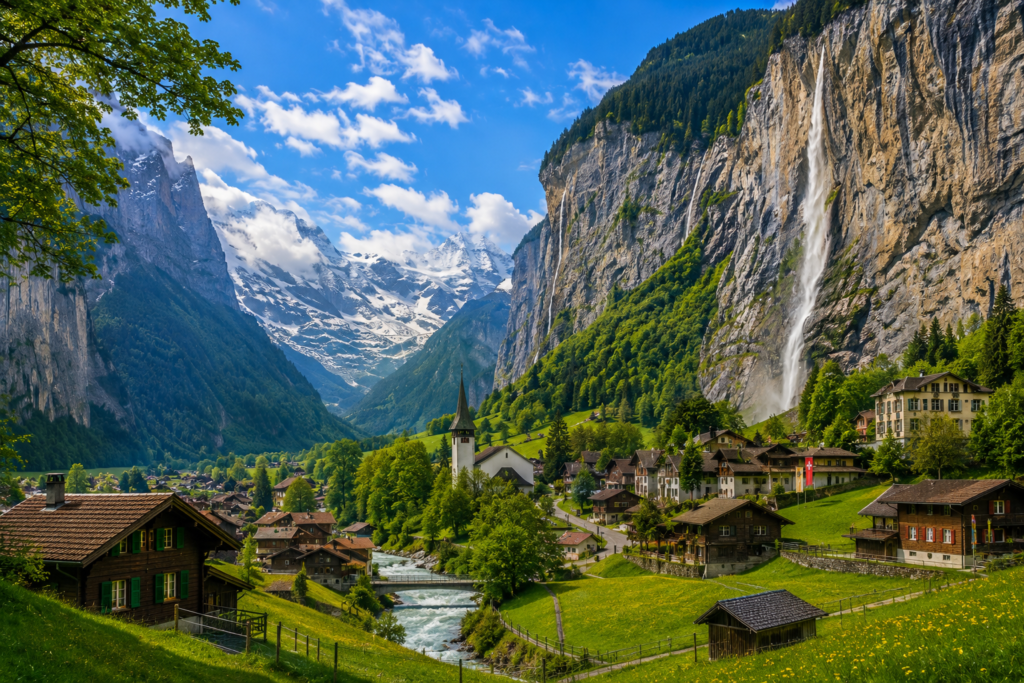
A breathtaking panoramic view of Lauterbrunnen Valley featuring the iconic Staubbach Falls, lush green meadows, traditional Swiss chalets, and dramatic limestone cliffs beneath snow-capped Alpine peaks.
Quick Facts
| Detail | Information |
|---|---|
| Location | Bernese Oberland, Switzerland |
| Elevation | 795 m (2,608 ft) |
| Best Time to Visit | May–September |
| Time Needed | 1–2 Days |
| Entry Fee | Free to explore the valley (some attractions require tickets) |
| Family Friendly | Yes |
| Wheelchair Accessible | Partially |
| Best For | Nature lovers, hikers, photographers, families, couples |
Why Visit Lauterbrunnen Valley?
Imagine a peaceful valley where towering cliffs rise nearly 300 meters into the sky, dozens of waterfalls cascade down rocky walls, charming wooden chalets sit among flower-filled meadows, and snow-covered peaks frame every view. That is Lauterbrunnen Valley—one of the most beautiful landscapes in Switzerland.
Often described as one of the inspirations for fantasy worlds in literature and film, Lauterbrunnen feels almost unreal. Whether you’re hiking beside waterfalls, exploring picturesque villages, or simply admiring the scenery from a café terrace, every moment here is unforgettable.
Complete Description
Located in the heart of the Bernese Oberland, Lauterbrunnen Valley is famous for its spectacular natural beauty and peaceful alpine atmosphere. The valley stretches between towering limestone cliffs, with 72 waterfalls flowing down its steep rock faces, creating one of Europe’s most remarkable landscapes.
The village of Lauterbrunnen itself is small and charming, offering traditional Swiss architecture, cozy cafés, boutique hotels, and easy access to nearby mountain villages such as Wengen, Mürren, and Gimmelwald.
One of the valley’s highlights is Staubbach Falls, which plunges nearly 300 meters from the cliffs above. During spring and early summer, melting snow dramatically increases the waterfalls’ flow, making the scenery even more spectacular.
For visitors seeking tranquility, Lauterbrunnen provides the perfect escape from busy cities while serving as an excellent base for exploring the surrounding Alps.
Best Things to Do
- Visit the magnificent Staubbach Falls.
- Explore the impressive Trümmelbach Falls inside the mountain.
- Ride the cable car to Mürren.
- Walk through the peaceful village of Gimmelwald.
- Take scenic hikes through alpine meadows.
- Visit Wengen via mountain railway.
- Enjoy cycling through the valley.
- Capture stunning waterfall photography.
- Relax at traditional Swiss cafés overlooking the mountains.
Best Time to Visit
Spring (May–June)
- Waterfalls at their most powerful.
- Wildflowers bloom across the valley.
- Pleasant hiking weather.
- Fewer crowds than summer.
Summer (July–August)
- Ideal hiking conditions.
- Long daylight hours.
- Mountain railways fully operational.
- Vibrant green landscapes.
Autumn (September–October)
- Golden forests.
- Cooler temperatures.
- Peaceful atmosphere.
- Beautiful photography opportunities.
Winter (December–February)
- Snow-covered villages.
- Nearby ski resorts.
- Magical Alpine scenery.
- Christmas charm.
Photography Tips
- Visit Staubbach Falls early in the morning for soft lighting.
- Use a tripod to create silky waterfall effects.
- Capture panoramic valley views from Mürren.
- Bring a wide-angle lens for dramatic landscapes.
- Spring offers the most powerful waterfalls, while autumn provides colorful scenery.
- Keep a microfiber cloth handy to wipe water droplets from your camera lens near waterfalls.
How to Reach
From Interlaken
Direct train to Lauterbrunnen.
Approximate travel time: 20–25 minutes
From Zurich
Train via Bern and Interlaken.
Approximate travel time: 2.5–3 hours
From Lucerne
Train to Interlaken followed by a direct connection.
Approximate travel time: 2.5 hours
The village railway station is centrally located, making it easy to explore on foot.
Nearby Attractions
- Mürren
- Wengen
- Gimmelwald
- Trümmelbach Falls
- Staubbach Falls
- Jungfraujoch
- Schilthorn
- Interlaken
Travel Tips
- Spend at least one night to experience the valley after day-trippers leave.
- Wear waterproof hiking shoes, especially near waterfalls.
- Carry a rain jacket because mountain weather can change quickly.
- Purchase a regional travel pass if planning multiple mountain excursions.
- Start hikes early for quieter trails and better lighting.
Pros & Cons
Pros
- One of Switzerland’s most beautiful natural landscapes.
- Home to numerous spectacular waterfalls.
- Excellent hiking opportunities for all skill levels.
- Peaceful villages with authentic Swiss charm.
- Great base for exploring the Jungfrau region.
Cons
- Accommodation fills quickly during summer.
- Weather can be unpredictable.
- Some attractions have seasonal opening hours.
- Mountain transport costs can add up.
Who Should Visit?
✔ Nature lovers
✔ Couples seeking a romantic getaway
✔ Families looking for outdoor adventures
✔ Solo travelers
✔ Landscape photographers
✔ Hiking enthusiasts
✔ Travelers wanting a quieter Swiss Alpine experience
Personal Recommendation
If you want to experience the Switzerland you’ve always imagined—green valleys, dramatic waterfalls, wooden chalets, and majestic mountains—Lauterbrunnen Valley should be at the top of your itinerary. Spend at least two days exploring the surrounding villages and scenic hiking trails. The peaceful atmosphere and breathtaking landscapes make it one of the most memorable destinations in the entire country.
6. Bern – Switzerland’s Charming Medieval Capital
Hero Image Suggestion
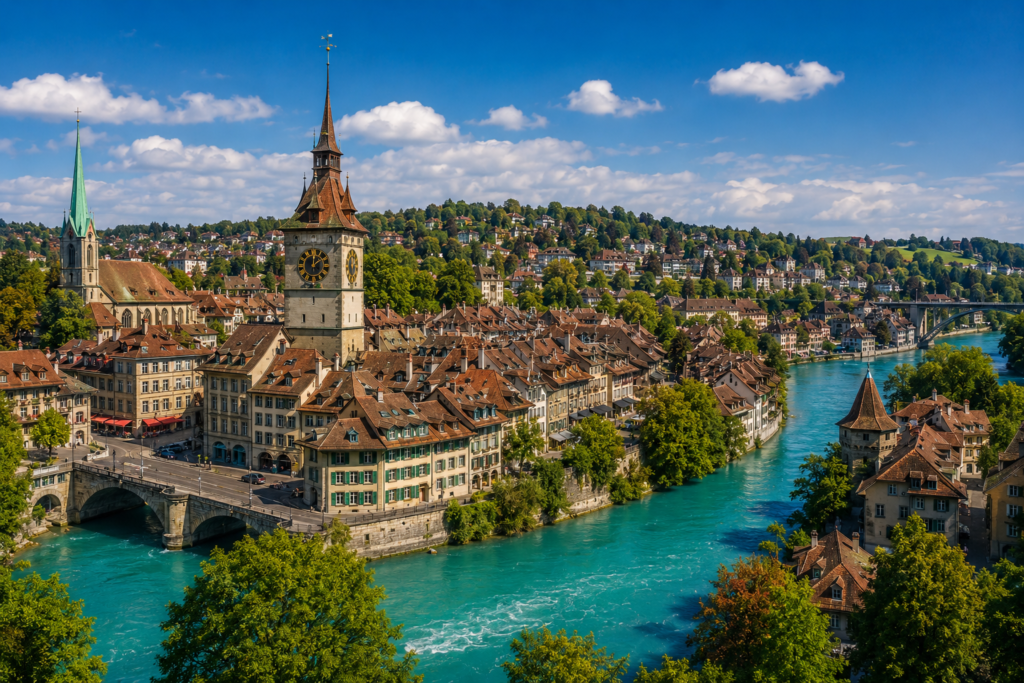
A panoramic view of Bern’s UNESCO-listed Old Town with the iconic Zytglogge Clock Tower, sandstone buildings, and the turquoise Aare River winding around the city.
Quick Facts
| Detail | Information |
|---|---|
| Location | Central Switzerland |
| Elevation | 542 m (1,778 ft) |
| Best Time to Visit | April–October |
| Time Needed | 1–2 Days |
| Entry Fee | Free to explore the Old Town (some museums require tickets) |
| Family Friendly | Yes |
| Wheelchair Accessible | Most major attractions are accessible |
| Best For | History lovers, families, couples, photographers, culture enthusiasts |
Why Visit Bern?
Bern is a city where history comes alive. As Switzerland’s capital, it combines political importance with timeless medieval beauty. Walking through its cobblestone streets feels like stepping back several centuries, yet the city also offers vibrant cafés, boutique shops, world-class museums, and a relaxed riverside atmosphere.
Unlike larger European capitals, Bern has a peaceful pace that encourages visitors to slow down and truly appreciate its architecture, history, and local culture.
Complete Description
Founded in the 12th century, Bern has preserved much of its medieval character, earning its Old Town recognition as a UNESCO World Heritage Site.
The city is famous for its elegant sandstone buildings, covered shopping arcades stretching for kilometers, colorful fountains, and the iconic Zytglogge Clock Tower. Every hour, crowds gather to watch the historic astronomical clock perform its centuries-old mechanical show.
The turquoise Aare River curves around the Old Town, creating spectacular viewpoints and peaceful walking paths. During summer, locals even float down the river, one of Bern’s most unique traditions.
Visitors will also discover museums, art galleries, botanical gardens, and the famous Bear Park, reflecting the city’s rich cultural heritage.
Best Things to Do
- Explore Bern’s UNESCO-listed Old Town.
- Watch the Zytglogge Clock Tower performance.
- Visit the Federal Palace (Swiss Parliament).
- Walk along the beautiful Aare River.
- Explore Bear Park.
- Visit the Einstein Museum.
- Shop beneath the historic covered arcades.
- Relax at Rosengarten (Rose Garden) for panoramic city views.
- Enjoy Swiss pastries and coffee at a traditional café.
Best Time to Visit
Spring (April–May)
- Blooming gardens
- Comfortable temperatures
- Ideal walking weather
- Smaller crowds
Summer (June–August)
- Outdoor cafés
- River activities
- Festivals
- Long daylight hours
Autumn (September–October)
- Colorful foliage
- Pleasant temperatures
- Excellent sightseeing conditions
- Fewer tourists
Winter (December–February)
- Christmas markets
- Festive decorations
- Cozy cafés
- Snow-dusted medieval streets
Photography Tips
- Visit Rosengarten for the best panoramic city views.
- Photograph the Zytglogge during the golden hour.
- Capture reflections along the Aare River.
- Explore the Old Town early in the morning before crowds arrive.
- Night photography beautifully highlights Bern’s illuminated sandstone buildings.
How to Reach
From Zurich
Direct train.
Approximate travel time: 1 hour
From Lucerne
Direct train.
Approximate travel time: 1 hour
From Interlaken
Frequent direct trains.
Approximate travel time: 50 minutes
Bern’s central railway station is within walking distance of the Old Town.
Nearby Attractions
- Rosengarten
- Bear Park
- Federal Palace
- Einstein Museum
- Gurten Mountain
- Aare River
- Emmental Region
Travel Tips
- Explore the Old Town on foot to fully appreciate its medieval charm.
- Visit the Zytglogge a few minutes before the hour to watch the animated clock show.
- Carry comfortable walking shoes, as many streets are paved with cobblestones.
- Spend time at Rosengarten during sunset for breathtaking city views.
- Taste traditional Swiss chocolates and local pastries from artisan bakeries.
Pros & Cons
Pros
- Beautifully preserved medieval architecture.
- UNESCO World Heritage Old Town.
- Easy to explore in a day.
- Excellent public transportation.
- Rich history and cultural attractions.
Cons
- Fewer adventure activities compared to Alpine destinations.
- Some museums close earlier than expected.
- Accommodation prices can be high during peak season.
Who Should Visit?
✔ History enthusiasts
✔ Families
✔ Couples
✔ Solo travelers
✔ Architecture lovers
✔ Photography enthusiasts
✔ Travelers interested in Swiss culture and heritage
Personal Recommendation
Bern may not have towering Alpine peaks like Interlaken or Zermatt, but it offers something equally valuable—authentic Swiss history, elegant architecture, and a relaxed atmosphere. If you enjoy exploring charming old towns, visiting museums, and discovering local culture, Bern deserves at least one full day on your Switzerland itinerary. Its timeless beauty and welcoming atmosphere make it one of the country’s most rewarding cities to explore.
7. Rhine Falls – Europe’s Largest Waterfall
Hero Image Suggestion
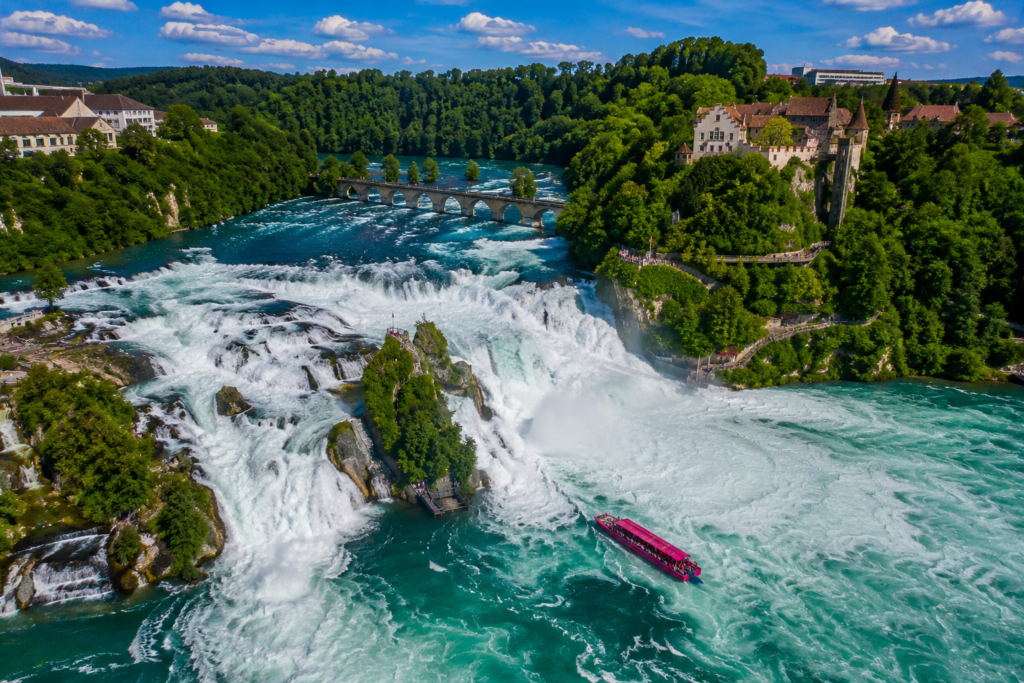
A breathtaking aerial view of Rhine Falls with powerful white water cascading over the rocks, surrounded by lush green forests and the historic Laufen Castle.
Quick Facts
| Detail | Information |
|---|---|
| Location | Neuhausen am Rheinfall, Canton of Schaffhausen, Switzerland |
| Height | 23 meters (75 feet) |
| Width | 150 meters (492 feet) |
| Best Time to Visit | May–September |
| Time Needed | 2–4 Hours |
| Entry Fee | Viewing platforms are mostly free; boat rides and castle entry require tickets |
| Family Friendly | Yes |
| Wheelchair Accessible | Most viewing areas are accessible |
| Best For | Families, photographers, couples, nature lovers |
Why Visit Rhine Falls?
Rhine Falls is Europe’s largest waterfall and one of Switzerland’s most spectacular natural attractions. While it may not be the tallest waterfall in the world, its incredible volume of rushing water creates a breathtaking display of power and beauty.
Standing beside the roaring falls, feeling the cool mist on your face, and watching millions of liters of water thunder over the rocks every second is an unforgettable experience.
Whether you choose to admire the falls from panoramic viewing platforms or take a boat ride close to the crashing water, Rhine Falls promises an adventure that appeals to visitors of all ages.
Complete Description
Located near the charming town of Schaffhausen in northern Switzerland, Rhine Falls stretches an impressive 150 meters across the Rhine River. During summer, melting Alpine snow dramatically increases the water flow, making the falls even more spectacular.
Several viewing platforms allow visitors to admire the waterfall from different angles, each offering unique perspectives for photography. One of the highlights is the iconic rock located in the center of the falls, which adventurous visitors can reach by boat.
The surrounding area includes scenic walking trails, picnic spots, cafés, souvenir shops, and the historic Laufen Castle, adding cultural interest to this natural wonder.
Thanks to excellent visitor facilities and easy accessibility, Rhine Falls is a perfect destination for families, couples, and day-trippers.
Best Things to Do
- Walk along the panoramic viewing platforms.
- Take a thrilling boat ride close to the waterfall.
- Climb to the central rock viewpoint.
- Visit the historic Laufen Castle.
- Explore riverside walking trails.
- Enjoy lunch with waterfall views.
- Photograph the falls from multiple viewpoints.
- Visit nearby Schaffhausen Old Town.
Best Time to Visit
Spring (April–May)
- Increasing water flow
- Pleasant temperatures
- Fewer visitors
- Fresh green landscapes
Summer (June–August)
- Peak water volume
- Boat rides operate regularly
- Warm weather
- Excellent photography conditions
Autumn (September–October)
- Beautiful autumn colors
- Comfortable temperatures
- Smaller crowds
- Peaceful atmosphere
Winter (November–March)
- Dramatic scenery
- Quiet surroundings
- Fewer tourists
- Limited boat services
Photography Tips
- Visit early in the morning for softer lighting.
- Use a fast shutter speed to freeze the rushing water or a slower shutter speed for silky waterfall effects.
- Protect your camera from water spray.
- A wide-angle lens captures the full width of the waterfall.
- Sunset creates warm golden tones over the surrounding landscape.
- The central rock viewpoint offers one of the most iconic photo opportunities.
How to Reach
From Zurich
Direct train to Neuhausen am Rheinfall.
Approximate travel time: 50–60 minutes
From Lucerne
Train via Zurich.
Approximate travel time: 2 hours
From Bern
Train via Zurich.
Approximate travel time: 2–2.5 hours
The railway station is only a short walk from the main viewing platforms.
Nearby Attractions
- Schaffhausen Old Town
- Laufen Castle
- Munot Fortress
- Rhine River Boat Cruises
- Stein am Rhein
- Swiss–German Border Region
Travel Tips
- Visit during summer to see the waterfall at its most powerful.
- Wear non-slip shoes, as viewing platforms may become wet.
- Bring a waterproof jacket if planning a boat ride.
- Arrive early during weekends to avoid crowds.
- Combine your visit with Schaffhausen for a perfect day trip.
Pros & Cons
Pros
- Europe’s largest waterfall.
- Easily accessible by train.
- Suitable for visitors of all ages.
- Excellent viewpoints and boat tours.
- Great destination for a half-day or full-day excursion.
Cons
- Can become crowded during summer.
- Boat rides require additional tickets.
- Weather affects visibility and photography.
Who Should Visit?
✔ Families
✔ Couples
✔ Nature lovers
✔ Photography enthusiasts
✔ First-time visitors to Switzerland
✔ Travelers looking for an easy day trip from Zurich
Personal Recommendation
Rhine Falls is one of those places that exceeds expectations. Photographs simply cannot capture the incredible sound, power, and scale of the rushing water. If you’re visiting northern Switzerland or staying in Zurich, don’t miss this natural wonder. Add a boat trip and a visit to nearby Schaffhausen to create one of the most memorable day trips in the country.
8. Montreux – Switzerland’s Elegant Lakeside Gem
Hero Image Suggestion
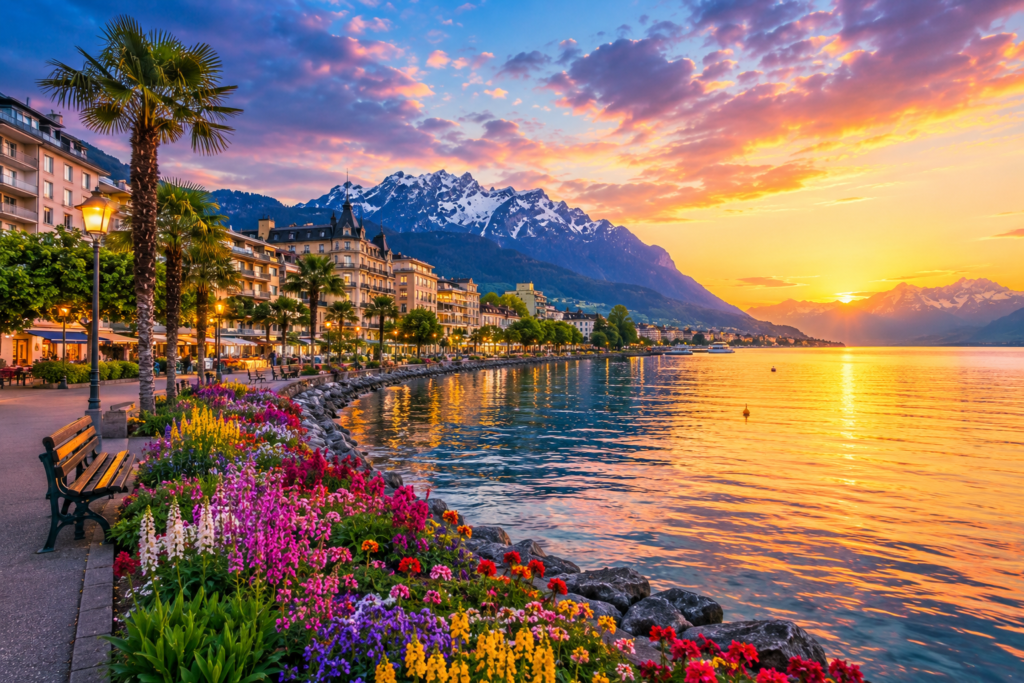
A stunning sunset view of the Montreux lakeside promenade lined with colorful flowers, palm trees, and the sparkling waters of Lake Geneva, with the snow-capped Alps in the background.
Quick Facts
| Detail | Information |
|---|---|
| Location | Canton of Vaud, Switzerland |
| Elevation | 395 m (1,296 ft) |
| Best Time to Visit | April–October |
| Time Needed | 1–2 Days |
| Entry Fee | Free to explore the town (some attractions require tickets) |
| Family Friendly | Yes |
| Wheelchair Accessible | Yes |
| Best For | Couples, families, photographers, wine lovers, culture enthusiasts |
Why Visit Montreux?
Nestled along the shores of Lake Geneva, Montreux is one of Switzerland’s most picturesque resort towns. Surrounded by vineyards, snow-capped mountains, and crystal-clear waters, the town offers a unique blend of natural beauty, luxury, and culture.
Whether you’re taking a leisurely stroll along its flower-filled promenade, exploring a medieval castle, or enjoying a scenic cruise on Lake Geneva, Montreux provides an unforgettable lakeside escape.
Complete Description
Montreux enjoys a mild climate that allows palm trees, exotic flowers, and lush gardens to flourish along its famous waterfront promenade. This Mediterranean-like atmosphere makes it one of Switzerland’s most unique destinations.
The town gained worldwide recognition through the annual Montreux Jazz Festival, attracting legendary musicians and visitors from across the globe. Even outside the festival season, Montreux remains lively with cafés, boutique hotels, art installations, and relaxing lakeside parks.
One of the town’s highlights is the magnificent Chillon Castle, a beautifully preserved medieval fortress situated on a rocky island just outside Montreux. Together with the Lavaux Vineyards, another UNESCO World Heritage Site nearby, Montreux offers visitors a perfect combination of history, culture, and spectacular scenery.
Best Things to Do
- Walk along the beautiful Montreux Lakeside Promenade.
- Visit the famous Chillon Castle.
- Take a cruise across Lake Geneva.
- Explore the Lavaux Vineyard Terraces.
- Ride the scenic GoldenPass panoramic train.
- Visit the Freddie Mercury Statue.
- Enjoy local cafés with lake views.
- Discover boutique shops and local markets.
- Attend the Montreux Jazz Festival if visiting in summer.
Best Time to Visit
Spring (April–May)
- Blooming flowers
- Pleasant temperatures
- Peaceful atmosphere
- Excellent sightseeing weather
Summer (June–August)
- Warm lakeside weather
- Outdoor festivals
- Lake cruises
- Vibrant nightlife
Autumn (September–October)
- Beautiful vineyard colors
- Comfortable temperatures
- Wine harvest season
- Fewer tourists
Winter (November–February)
- Christmas markets
- Festive lights
- Snow-covered mountain backdrop
- Relaxed atmosphere
Photography Tips
- Visit during sunrise for peaceful lake reflections.
- Sunset creates spectacular colors across Lake Geneva.
- Capture panoramic views from Chillon Castle.
- Walk along the promenade to photograph colorful flower displays.
- Use a wide-angle lens to include both the lake and Alpine mountains.
- Early mornings offer the clearest conditions and fewer visitors.
How to Reach
From Geneva
Direct train.
Approximate travel time: 1 hour
From Lausanne
Frequent direct trains.
Approximate travel time: 20–30 minutes
From Zurich
Direct train.
Approximate travel time: 2.5–3 hours
Montreux Railway Station is centrally located and within walking distance of the lake.
Nearby Attractions
- Chillon Castle
- Lavaux Vineyards
- Lake Geneva
- Rochers-de-Naye
- Vevey
- Lausanne
- GoldenPass Railway
Travel Tips
- Purchase a Swiss Travel Pass for discounted transportation.
- Spend an evening walking along the illuminated lakeside promenade.
- Visit Chillon Castle early in the morning to avoid crowds.
- Sample local wines from the nearby Lavaux region.
- Bring comfortable walking shoes for exploring vineyards and lakeside paths.
Pros & Cons
Pros
- Beautiful lakeside scenery.
- Mild climate compared to much of Switzerland.
- Rich cultural heritage.
- Excellent public transportation.
- Perfect for relaxing holidays.
Cons
- Accommodation can be expensive during festival season.
- Summer attracts large crowds.
- Some attractions have seasonal opening hours.
Who Should Visit?
✔ Couples seeking a romantic getaway
✔ Families looking for a relaxing vacation
✔ Photography enthusiasts
✔ Wine lovers
✔ History and culture enthusiasts
✔ Luxury travelers
✔ Scenic train journey lovers
Personal Recommendation
Montreux offers a completely different side of Switzerland compared to the Alpine destinations. The combination of sparkling Lake Geneva, elegant promenades, historic castles, and world-famous vineyards creates an atmosphere that is both sophisticated and relaxing. If you’re planning a scenic journey through western Switzerland, Montreux deserves at least one or two days on your itinerary. It’s a destination where breathtaking landscapes, rich culture, and peaceful lakeside charm come together beautifully.
9. St. Moritz – Switzerland’s World-Famous Luxury Mountain Resort
Hero Image Suggestion
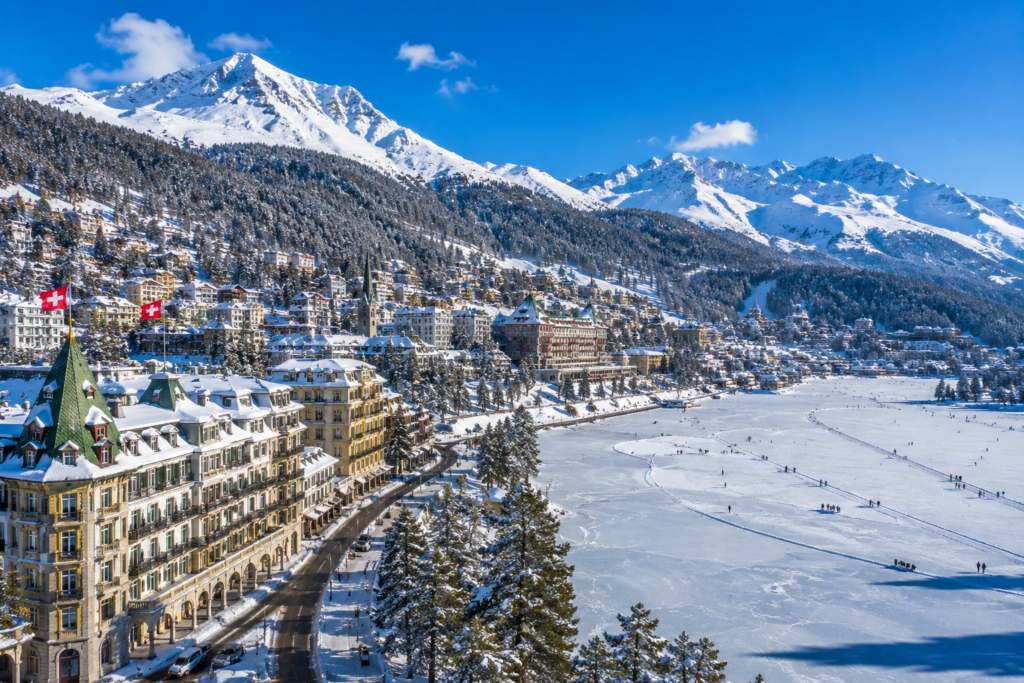
A breathtaking winter panorama of St. Moritz overlooking its frozen lake, luxury hotels, snow-covered Alpine peaks, and world-class ski slopes under a clear blue sky.
Quick Facts
| Detail | Information |
|---|---|
| Location | Engadin Valley, Graubünden, Switzerland |
| Elevation | 1,822 m (5,978 ft) |
| Best Time to Visit | December–March (winter sports), June–September (summer hiking) |
| Time Needed | 2–3 Days |
| Entry Fee | Free to explore the town (activities and cable cars require tickets) |
| Family Friendly | Yes |
| Wheelchair Accessible | Most public areas and luxury hotels are accessible |
| Best For | Luxury travelers, couples, adventure seekers, photographers |
Why Visit St. Moritz?
St. Moritz is one of the world’s most prestigious mountain resorts, known for its glamorous atmosphere, luxury hotels, world-class ski slopes, and breathtaking Alpine scenery. Having hosted the Winter Olympics twice, it has become a symbol of elegance and outdoor adventure.
Whether you’re skiing on perfectly groomed slopes, relaxing beside the beautiful lake, or dining in a Michelin-starred restaurant, St. Moritz delivers an unforgettable Swiss Alpine experience.
Complete Description
Located in the picturesque Engadin Valley, St. Moritz enjoys over 300 days of sunshine each year, making it one of Switzerland’s sunniest mountain destinations.
The town is renowned for its luxurious hotels, designer boutiques, gourmet restaurants, and vibrant cultural scene. During winter, visitors come from around the world to enjoy skiing, snowboarding, ice skating, and other winter sports.
In summer, the region transforms into a paradise for hikers, cyclists, and nature lovers. Crystal-clear mountain lakes, scenic trails, and panoramic cable car rides reveal spectacular Alpine landscapes.
Despite its reputation for luxury, St. Moritz also offers plenty of outdoor experiences that allow visitors to appreciate the natural beauty of the Swiss Alps.
Best Things to Do
- Ski or snowboard on world-famous slopes.
- Ride the scenic Bernina Express railway.
- Walk around the beautiful Lake St. Moritz.
- Take a cable car to Corviglia Mountain.
- Visit the Segantini Museum.
- Enjoy luxury shopping and fine dining.
- Go hiking or mountain biking during summer.
- Experience horse racing on the frozen lake in winter.
- Relax at one of the town’s luxury wellness spas.
Best Time to Visit
Winter (December–March)
- Excellent skiing conditions
- Snow-covered Alpine scenery
- Winter festivals
- Luxury seasonal atmosphere
Summer (June–September)
- Pleasant hiking weather
- Mountain biking
- Scenic train journeys
- Crystal-clear lakes
Autumn (September–October)
- Golden mountain landscapes
- Peaceful atmosphere
- Ideal photography conditions
- Smaller crowds
Spring (April–May)
- Quiet travel season
- Lower accommodation prices
- Beautiful mountain scenery
Photography Tips
- Sunrise over Lake St. Moritz creates stunning reflections.
- Winter offers dramatic snowy landscapes.
- Ride the Bernina Express for incredible mountain photography.
- Capture panoramic views from Corviglia.
- Use a polarizing filter to enhance lake colors and mountain skies.
How to Reach
From Zurich
Direct train via Chur.
Approximate travel time: 3–3.5 hours
From Lucerne
Train via Chur.
Approximate travel time: 4.5 hours
From Milan
Travel via Tirano on the Bernina Express.
Approximate travel time: 3 hours
The scenic Bernina Express is one of the world’s most beautiful train journeys and highly recommended.
Nearby Attractions
- Bernina Express
- Corviglia
- Muottas Muragl
- Lake St. Moritz
- Silvaplana
- Pontresina
- Diavolezza Glacier
Travel Tips
- Reserve hotels several months in advance during winter.
- Purchase ski passes online for possible discounts.
- Pack warm clothing, even during summer evenings.
- Ride the Bernina Express if traveling between Switzerland and Italy.
- Budget carefully, as St. Moritz is one of Switzerland’s most expensive destinations.
Pros & Cons
Pros
- World-famous luxury destination.
- Outstanding skiing and winter sports.
- Beautiful mountain scenery throughout the year.
- Excellent public transportation.
- Home to the scenic Bernina Express.
Cons
- One of Switzerland’s most expensive destinations.
- Hotels sell out quickly during winter.
- Dining and shopping can be costly.
Who Should Visit?
✔ Luxury travelers
✔ Couples
✔ Winter sports enthusiasts
✔ Photography lovers
✔ Scenic railway enthusiasts
✔ Adventure seekers
✔ Honeymoon travelers
Personal Recommendation
St. Moritz is much more than a luxury ski resort—it is a destination where breathtaking Alpine scenery meets world-class hospitality. Whether you visit in winter for skiing or in summer for hiking and scenic train journeys, St. Moritz offers experiences that few mountain towns can match. Even if you don’t stay in one of its famous luxury hotels, spending a day exploring this elegant Alpine resort is well worth your time.
10. Oeschinen Lake – Switzerland’s Most Beautiful Alpine Lake
Hero Image Suggestion
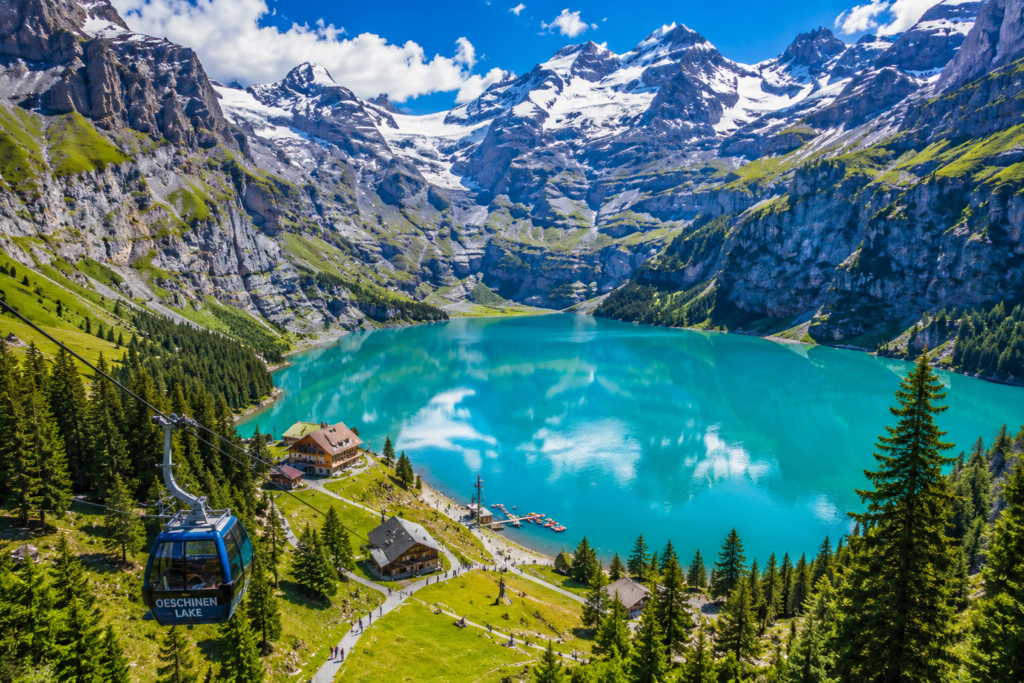
A breathtaking aerial view of Oeschinen Lake showcasing its crystal-clear turquoise water surrounded by towering snow-capped mountains, dense pine forests, and lush Alpine meadows during a sunny summer afternoon.
Quick Facts
| Detail | Information |
|---|---|
| Location | Kandersteg, Bernese Oberland, Switzerland |
| Elevation | 1,578 m (5,177 ft) |
| Best Time to Visit | June–September |
| Time Needed | Half Day to Full Day |
| Entry Fee | Free (Cable car charges apply) |
| Family Friendly | Yes |
| Wheelchair Accessible | Partially (Cable car accessible; some trails are steep) |
| Best For | Nature lovers, hikers, photographers, families, couples |
Why Visit Oeschinen Lake?
If there is one lake that perfectly captures the breathtaking beauty of the Swiss Alps, it is Oeschinen Lake. Famous for its brilliant turquoise waters, dramatic mountain scenery, and peaceful surroundings, this UNESCO-listed Alpine lake is often considered one of the most beautiful natural attractions in Switzerland.
Whether you’re hiking along scenic trails, rowing across the calm waters, or simply relaxing on the lakeshore, Oeschinen Lake offers an unforgettable escape into nature.
Complete Description
Hidden high above the charming village of Kandersteg, Oeschinen Lake is surrounded by towering limestone cliffs, lush forests, and snow-covered peaks that reflect beautifully in its crystal-clear waters.
Fed by glacial streams, the lake changes color throughout the day, ranging from deep emerald green to brilliant turquoise depending on the sunlight.
Visitors can reach the lake by taking a scenic cable car followed by a short walk through Alpine meadows. Upon arrival, you’ll discover peaceful picnic areas, hiking trails, mountain restaurants, and opportunities to rent rowing boats during the summer months.
The area is also part of the Jungfrau-Aletsch UNESCO World Heritage region, making it one of Switzerland’s most valuable natural landscapes.
Every season brings a different experience. Summer offers colorful wildflowers and hiking trails, while winter transforms the area into a peaceful snow-covered paradise.
Best Things to Do
- Walk around the stunning Alpine lake.
- Rent a rowing boat during summer.
- Hike to panoramic viewpoints above the lake.
- Enjoy a picnic beside the crystal-clear water.
- Ride the Kandersteg–Oeschinen cable car.
- Photograph the surrounding mountain scenery.
- Visit nearby Alpine restaurants.
- Experience winter hiking and snowshoeing during snowy months.
Best Time to Visit
Summer (June–September)
- Brilliant turquoise water
- Hiking trails fully open
- Boat rentals available
- Warm daytime temperatures
Autumn (September–October)
- Golden forests
- Peaceful atmosphere
- Comfortable hiking weather
- Excellent photography
Winter (December–March)
- Snow-covered landscapes
- Winter hiking
- Sledding opportunities
- Quiet surroundings
Spring (May)
- Melting snow creates dramatic scenery
- Fewer visitors
- Fresh Alpine landscapes
Photography Tips
- Visit early in the morning for calm reflections.
- Use a polarizing filter to enhance the lake’s vibrant colors.
- Capture panoramic views from the higher hiking trails.
- Bring a drone only where local regulations permit.
- Summer mornings provide the clearest visibility.
- Wide-angle lenses work best for showcasing the dramatic mountain scenery.
How to Reach
From Interlaken
Train to Spiez, then continue to Kandersteg.
Approximate travel time: 1.5 hours
From Bern
Direct train to Kandersteg.
Approximate travel time: 1 hour
From Zurich
Train via Bern.
Approximate travel time: 2.5–3 hours
From Kandersteg Railway Station, take the cable car to Oeschinen followed by a pleasant 20–30 minute walk to the lake.
Nearby Attractions
- Kandersteg
- Blausee (Blue Lake)
- Gemmi Pass
- Lötschberg Mountain Railway
- Adelboden
- Lake Thun
- Interlaken
Travel Tips
- Arrive early during summer to avoid crowds.
- Wear comfortable hiking shoes, as some trails are uneven.
- Bring sunscreen, sunglasses, and plenty of water.
- Pack a picnic to enjoy beside the lake.
- Check the cable car operating schedule before your visit.
- Swimming is possible in summer, but the glacial water remains extremely cold.
Pros & Cons
Pros
- One of Switzerland’s most beautiful Alpine lakes.
- Incredible hiking opportunities.
- Crystal-clear turquoise water.
- Suitable for families and nature lovers.
- Perfect destination for landscape photography.
Cons
- Cable car tickets add to the overall cost.
- Peak summer season can become crowded.
- Some hiking trails are steep and require good footwear.
- Weather conditions can change rapidly in the mountains.
Who Should Visit?
✔ Nature lovers
✔ Families
✔ Couples
✔ Landscape photographers
✔ Hiking enthusiasts
✔ Solo travelers
✔ Adventure seekers
Personal Recommendation
Oeschinen Lake is one of those rare destinations that looks even more spectacular in person than it does in photographs. The combination of turquoise glacial water, towering Alpine peaks, peaceful forests, and scenic hiking trails creates a truly magical experience. If you’re searching for Switzerland’s most picturesque lake, Oeschinen should be at the very top of your list. Spend a full day here to hike, relax, and simply enjoy one of the country’s finest natural wonders.