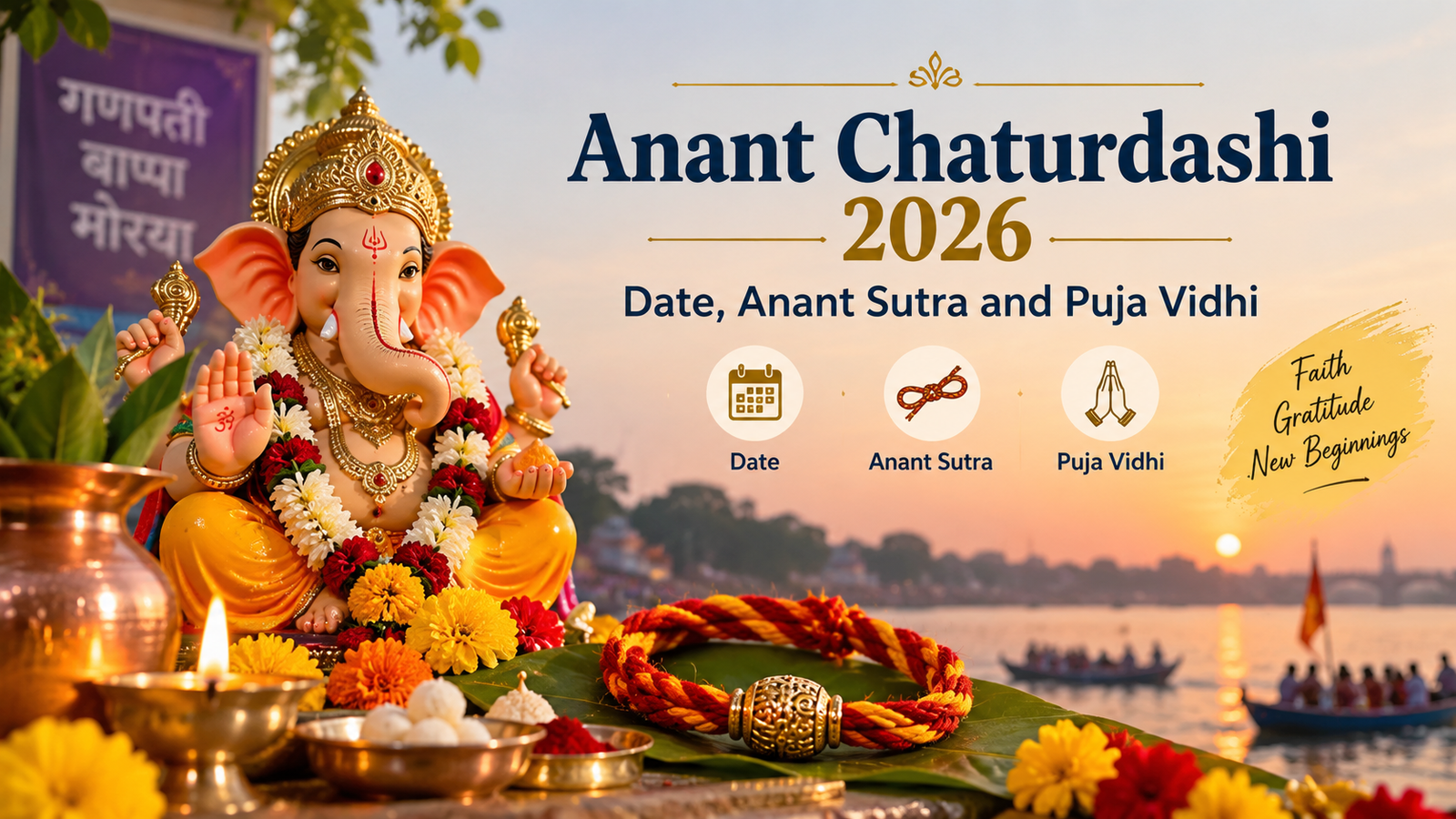
While most of Maharashtra spends September 25 carrying Ganpati to the water, a quieter ritual plays out inside homes across the rest of India on the very same day. Someone ties a thread with fourteen small knots around the wrist. Nobody dances or beats a dhol for it. This is Anant Chaturdashi, a day that belongs to Lord Vishnu in his infinite form. It deserves a story of its own, separate from the Ganpati farewell it happens to share a date with.
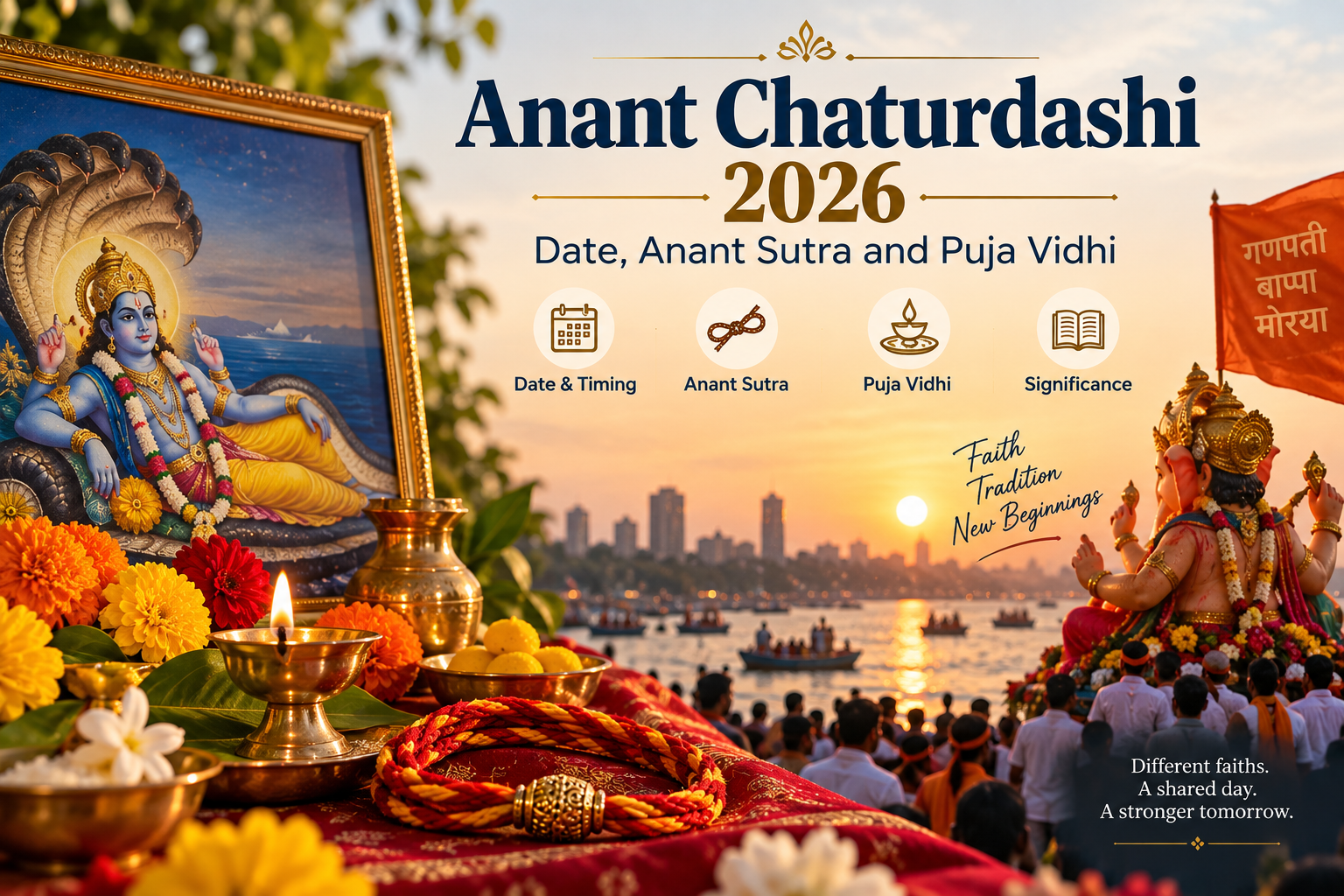
Anant Chaturdashi 2026: Date and Timing
Anant Chaturdashi falls every year on the Chaturdashi tithi of Bhadrapada Shukla Paksha, the fourteenth day of the bright fortnight. In 2026, that date is Friday, September 25. The Chaturdashi tithi begins around 11:18 PM on September 24 and runs until roughly 11:06 PM on September 25. Families observe the festival on the 25th, following the udaya tithi rule, the convention of choosing whichever day the sunrise falls within the tithi. Tithi timings shift slightly by city, so it helps to cross-check the exact window on a local panchang, such as PanchangBodh’s Anant Chaturdashi page, before starting the puja.
This also happens to be the tenth and final day of Ganeshotsav, the day the largest Ganesh Visarjan takes place across Maharashtra. The two festivals share a calendar date purely by coincidence of the lunar cycle. They belong to different deities and carry entirely different meanings.
Who Is Ananta, and Why Does This Day Belong to Him?
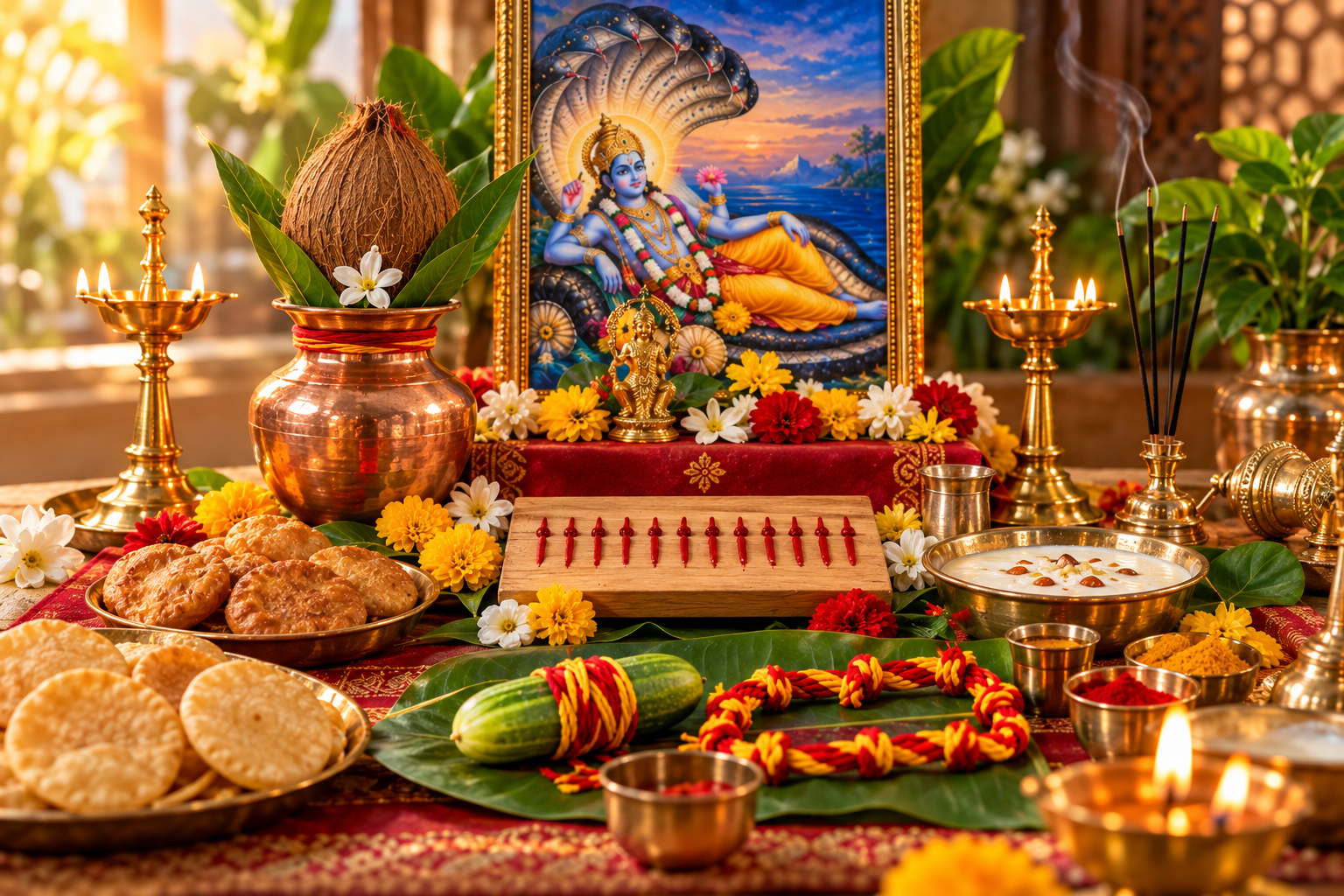
The word ananta simply means without end, boundless, infinite. Ananta is one of Lord Vishnu’s forms. Most images show him reclining on the coils of the great serpent Sheshnag, floating on the cosmic ocean of milk, the kshirsagar. Worshipping Vishnu in this form really honours continuity itself, the idea that some things hold steady no matter how much the world around them changes.
That theme of steadiness runs through the whole festival. Families use the day to ask for stability, protection, and the safety of everyone under their roof, rather than for any single wish or material gain. It focuses less on asking for something new and more on holding on to what already works.
The Story of Sushila and Kaundilya
Every Anant Chaturdashi carries the same vrat katha, the story of Sushila and her husband, Sage Kaundilya. In her father’s house, Sushila once tied a fourteen-knotted thread to her arm as part of the Anant vrat, and her family’s fortunes improved soon after. When she married Kaundilya and moved to his home, she continued the practice quietly.
One day, Kaundilya noticed the thread and asked her about it, not understanding its significance. When she explained the vrat, he mocked it, pulled the thread off her arm, and threw it into the fire. Misfortune followed him almost immediately, he lost his wealth, his position, everything he had built. Only after years of hardship did he realise his mistake. He set out to find Lord Ananta himself and ask for forgiveness. After a long, difficult search, marked by penance and near despair, Vishnu finally appeared before him, forgave him, and restored everything he had lost. Families retell the story every year as a reminder that faith, once dismissed carelessly, tends to demand a hard road back.
Puja Vidhi: How the Ritual Comes Together
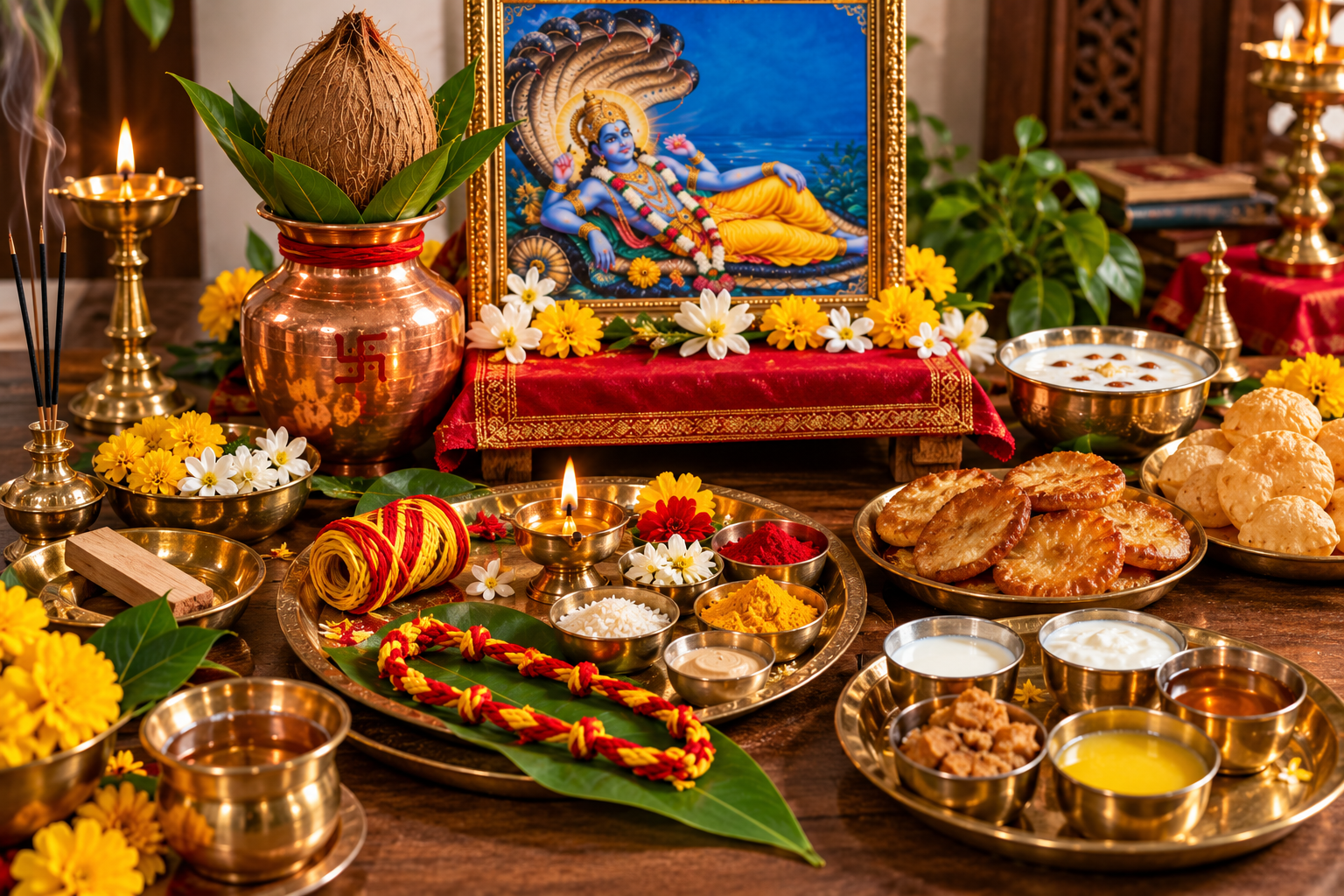
The ritual itself stays simple enough to do at home. Most of what it needs already sits in a puja cupboard.
Devotees begin with a bath and clean clothes, then take a sankalp, a short spoken resolve naming the vrat, their family lineage, and their intention behind observing it. Next, spread a clean cloth over a wooden chowki. Place a kalash filled with water on it, topped with a coconut, along with an image or murti of Vishnu, ideally showing him in his reclining Ananta Shayana form.
To make the Anant Sutra, take a length of cotton or silk thread and dye it with turmeric or kumkum until it turns a deep yellow or red. Tie fourteen knots into it. Each knot represents one of the fourteen lokas, the fourteen worlds that this infinite form of Vishnu holds together, and in some family traditions, the fourteen years the Pandavas spent in exile before their fortunes turned.
Several regions, particularly across eastern Uttar Pradesh and Bihar, add a distinct twist to the ritual. Families mark fourteen small vertical tilaks of vermilion on a wooden plank and place fourteen puas, a sweet deep-fried bread, along with fourteen puris on them. They set a bowl of panchamrit, the five-ingredient mixture of milk, curd, jaggery, honey, and ghee, beside them to represent the ocean of milk. Then they tie the fourteen-knotted thread around a cucumber and swirl it through the panchamrit five times before closing the puja.
Once the puja finishes, tie the sacred thread on the arm, traditionally the right arm for men and the left for women, following whatever convention the family has kept for generations. Many devotees also recite the Vishnu Sahasranama, the thousand names of Vishnu, believing it brings their wishes closer to fulfilment, and observe a fast through the day as part of the vrat.
Samagri: What to Keep Ready
Nothing on this list is hard to find. Most of it already sits in a puja cupboard by the time Bhadrapada rolls around. Keep the following ready a day ahead so the morning itself stays unhurried:
- A wooden chowki and a clean cloth to cover it
- A kalash, filled with water, with a coconut placed on top
- An image or murti of Vishnu, ideally in his reclining Ananta Shayana form
- Cotton or silk thread for the Anant Sutra, plus turmeric or kumkum to dye it
- Roli, akshat (unbroken rice), chandan, and fresh flowers
- A ghee lamp and incense
- Ingredients for panchamrit, milk, curd, jaggery, honey, and ghee
- Fourteen puas and fourteen puris, where the family follows that regional custom
Families who have kept this vrat for generations usually add a few small touches of their own, so it helps to check with an elder before the day arrives rather than improvising on the morning itself.
A Day Shared With Ganpati, But Not the Same Festival
Anant Chaturdashi and the main Ganesh Visarjan fall on the same tithi, so people often assume the two connect somehow. They do not. Ganpati’s ten-day stay and his farewell follow an entirely separate tradition, one that starts on Bhadrapada Chaturthi rather than Chaturdashi. Anant Chaturdashi would exist as its own observance even in a year when families chose not to keep a Ganpati idol at home at all. The overlap simply means many households do two things on the same day, tying the Anant Sutra in the morning, then carrying Bappa to the water later. Each ritual stands complete and meaningful on its own.
Why This Quiet Festival Still Resonates
Notice how different this day feels from the ten that came before it. Ganeshotsav runs loud, communal, and public, processions, music, entire neighbourhoods stepping outside together. Anant Chaturdashi asks for almost the opposite: a small corner of the home, a lamp, a thread tied quietly around the wrist, and a story a family may have repeated a hundred times before. In a stretch of the calendar built around celebration, it offers a pause instead. Families sit together, explain the fourteen knots to a child who has never asked before, and remember that faith does not always need an audience to matter.
Frequently Asked Questions
1. When is Anant Chaturdashi in 2026?
Anant Chaturdashi falls on Friday, September 25, 2026, the same day as the main Ganesh Visarjan.
2. Why does the Anant Sutra have fourteen knots?
The fourteen knots stand for the fourteen lokas, or worlds, that Lord Vishnu’s infinite Ananta form holds together, and in some family traditions, the fourteen years of the Pandavas’ exile.
3. On which arm should you tie the Anant Sutra?
Tradition generally has men tie it on the right arm and women on the left, though families follow their own inherited convention.
4. Is Anant Chaturdashi connected to Ganesh Visarjan?
Not directly. The two simply fall on the same tithi in the lunar calendar. Anant Chaturdashi honours Lord Vishnu’s Ananta form, while Ganesh Visarjan marks the end of the separate ten-day Ganeshotsav.
5. What is the story behind Anant Chaturdashi?
The festival’s vrat katha tells of Sushila and her husband, Sage Kaundilya, who dismissed the sacred thread’s power, faced years of hardship as a result, and eventually earned Lord Ananta’s forgiveness through devotion and penance.
Doing Ganpati’s farewell on the same day this year? Don’t miss our guide on Ganesh Visarjan 2026, vidhi and eco-friendly tips, and if you are still cooking through the festival, check out our list of 15 types of modak for Ganesh Chaturthi.