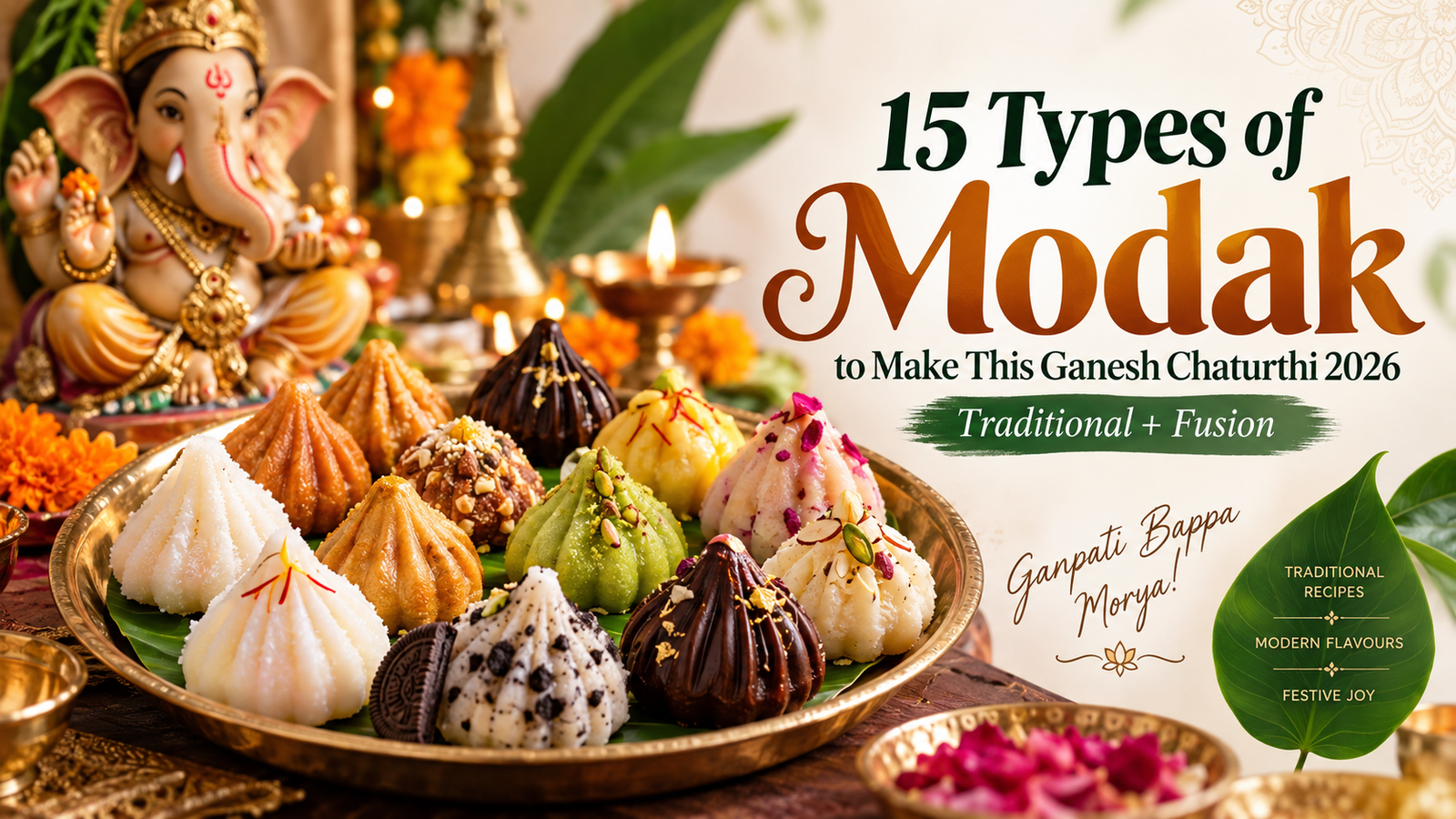
Ganpati Bappa has arrived, and if there’s one thing every household with a Ganesh idol at home agrees on, it’s that the modak plate cannot look the same every single day. Ganesh Chaturthi 2026 is a ten-day festival, so a lot of families try to make a different modak variety each day as an offering. Traditionally, 21 modaks are offered to Lord Ganesha, so there’s plenty of room to mix things up. Here’s a proper, expanded roundup, from the classic steamed version to modern fusion flavours, so you’ve got options for the whole festival.
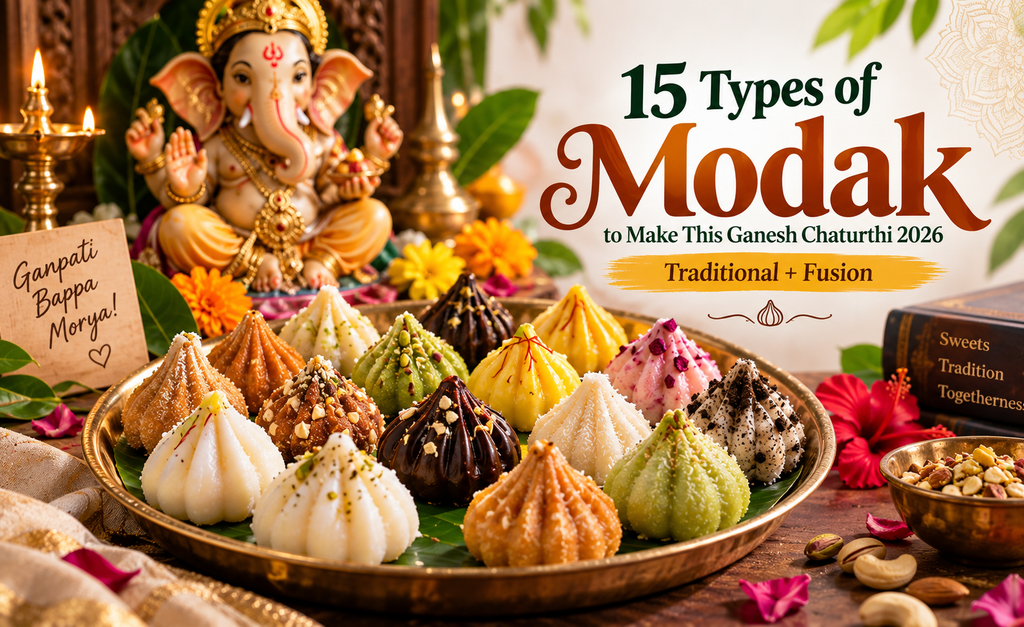
Modak by Other Names Across India
Before we get into the varieties, it’s worth knowing that modak goes by different names depending on where you are in India. It’s called kudumu or kadubu in Karnataka, kozhukattai in Tamil Nadu, and modakam in Andhra Pradesh and Telangana. The shape and filling stay largely similar across regions, but if you’re searching for recipes online, these regional names can turn up some genuinely good local variations worth trying.
Traditional Modak Varieties (Best for Naivedya/Puja)
If you’re making modak specifically as an offering, these are the ones that belong on the prasad thali. The filling stays true to the classic coconut-jaggery combination, only the outer covering or cooking method changes.
1. Ukadiche Modak
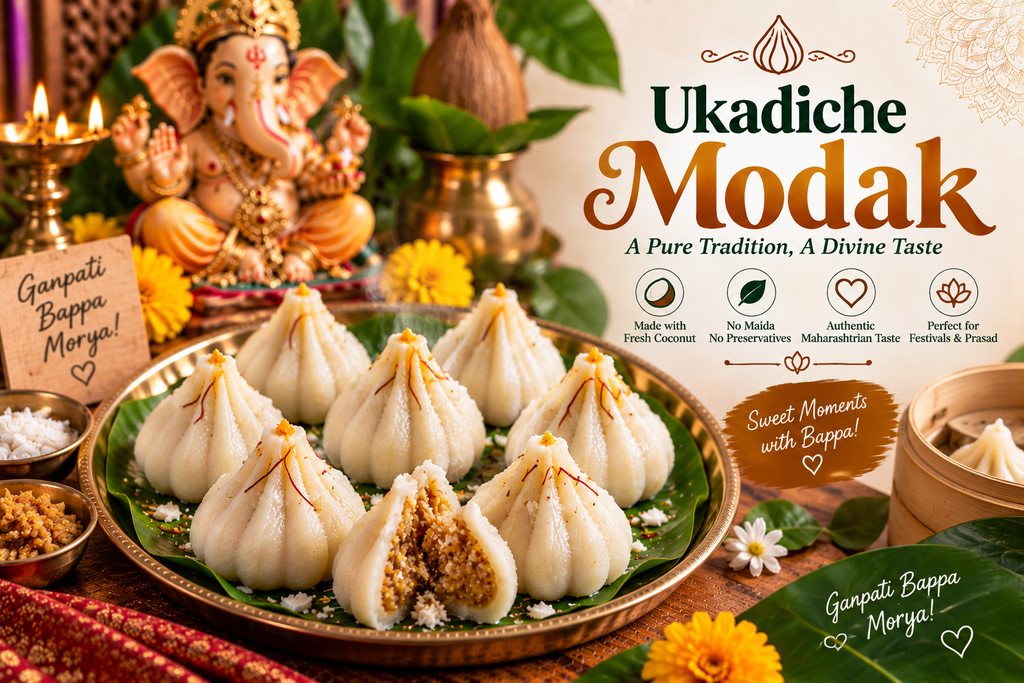
The one everyone pictures when they hear the word modak. “Ukadiche” means steamed in Marathi, a soft rice-flour outer shell wrapped around coconut and jaggery, flavoured with cardamom and sometimes nutmeg or poppy seeds. Tradition says the first modak made should be offered to Ganesha before the rest is shared as prasad.
Main ingredients: rice flour, fresh coconut, jaggery, cardamom, ghee. Keeps: best eaten fresh, same day.
2. Talniche Modak (Fried Modak)
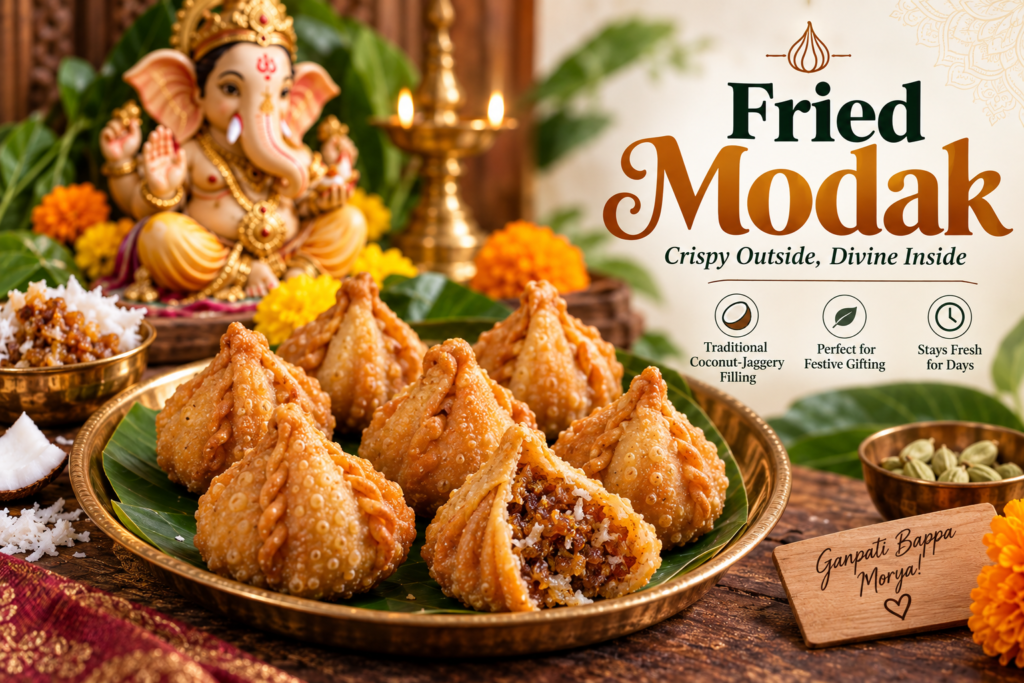
Same coconut-jaggery filling, but the covering, usually maida or wheat flour, is deep-fried into a crisp, golden crescent instead of steamed. It keeps for several days, which is exactly why it’s the variety people travel with or gift.
Main ingredients: maida or wheat flour, coconut, jaggery, oil for frying. Keeps: 4-5 days at room temperature in an airtight box.
3. Nariyal (Coconut) Modak
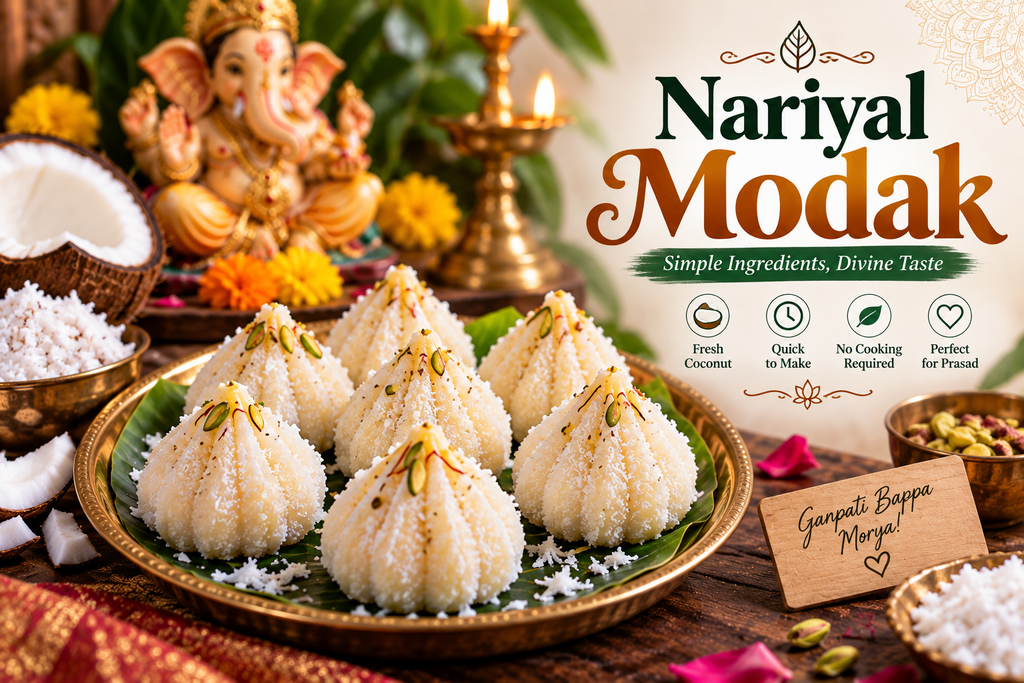
A no-cook, no-shell option, desiccated coconut mixed with condensed milk and cardamom, set directly in a mould. It takes barely 10 minutes and is one of the easiest ones on this list for beginners.
Main ingredients: desiccated coconut, condensed milk, cardamom. Keeps: 2-3 days refrigerated.
4. Rava (Semolina) Modak
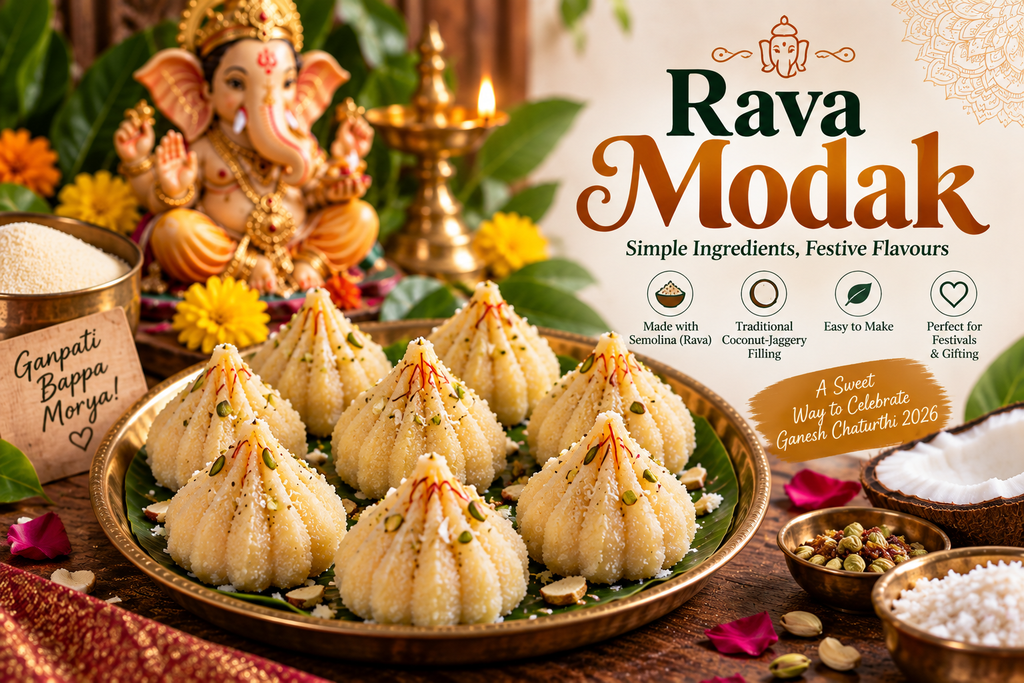
Not confident about rice-flour dough? Rava modak swaps it for semolina, which is far easier to handle, while keeping the same coconut-jaggery filling inside.
Main ingredients: semolina (rava), coconut, jaggery, ghee, cardamom. Keeps: best eaten within a day.
5. Dry Fruit Modak
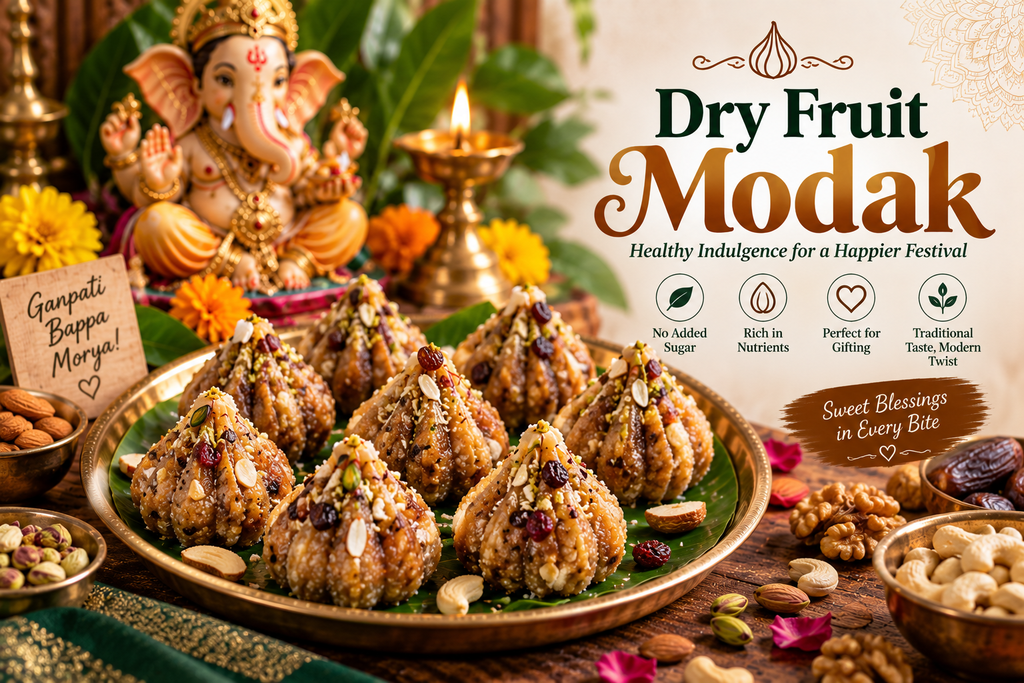
Dates, cashews, almonds, pistachios, and raisins blended together, sometimes with khoya and poppy seeds, then shaped and steamed like the traditional version. No added sugar, and it keeps well, which makes it a favourite for gifting.
Main ingredients: dates, cashews, almonds, pistachios, raisins. Keeps: 5-7 days refrigerated, longer than most other varieties.
Fusion and Modern Modak Varieties (Festival Sweets)
These are made in the spirit of the festival rather than as the actual puja offering, and they’ve become genuinely popular for sharing with guests and kids. Many families make one traditional batch for the puja and one fusion batch for everyone else.
6. Mawa (Khoya) Modak
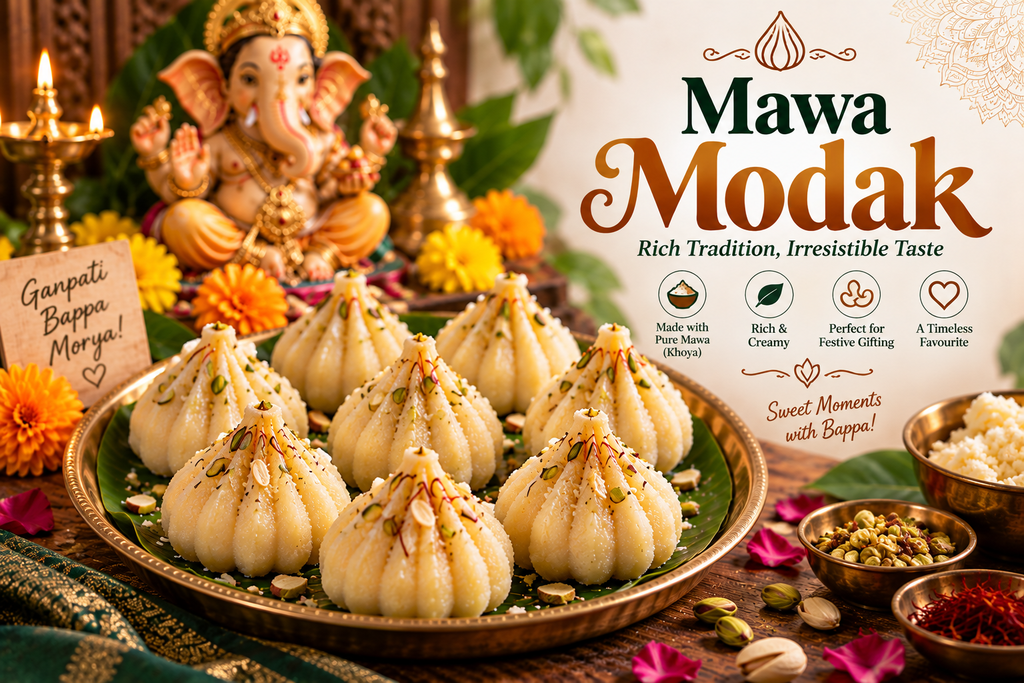
Crumbled khoya cooked with powdered sugar, saffron, and cardamom until it thickens, then pressed into a mould, sometimes stuffed with dates and nuts. This is the sweet-shop standard you’ll see across most of north and west India during the festival.
Main ingredients: khoya (mawa), sugar, cardamom. Keeps: 2-3 days refrigerated.
7. Kesar Modak
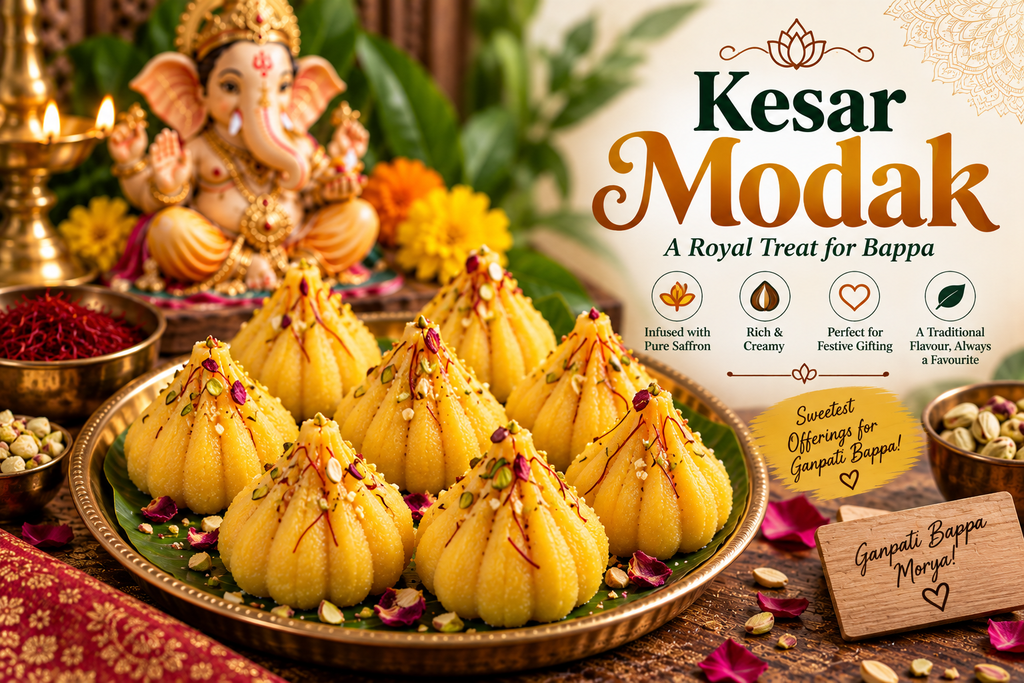
Essentially a mawa modak coloured and scented with saffron, often topped with a strand or two on top for that classic festive look. Soak the saffron in warm milk first so the colour spreads evenly through the mixture.
Main ingredients: khoya, sugar, saffron, cardamom, pistachios. Keeps: 2-3 days refrigerated.
8. Chocolate Modak
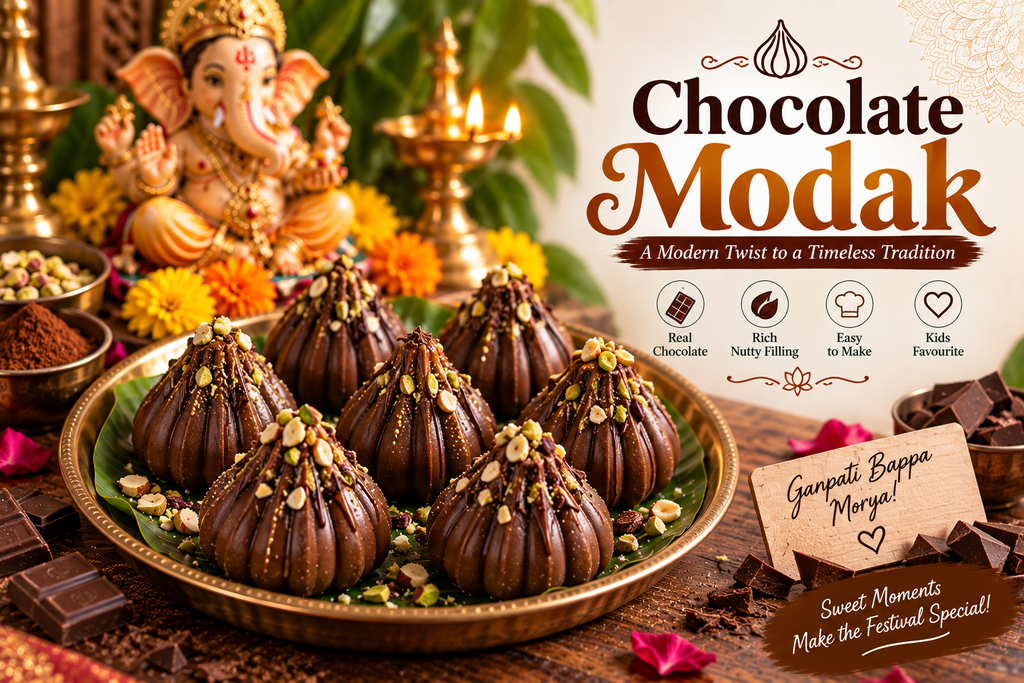
Melted chocolate set in a modak mould, sometimes with a nut filling inside. This is the most-ordered flavour after kesar in most city sweet shops, and it’s an easy win with the kids in the house.
Main ingredients: melted chocolate, condensed milk, chopped nuts. Keeps: 4-5 days refrigerated.
9. Kaju (Cashew) Modak
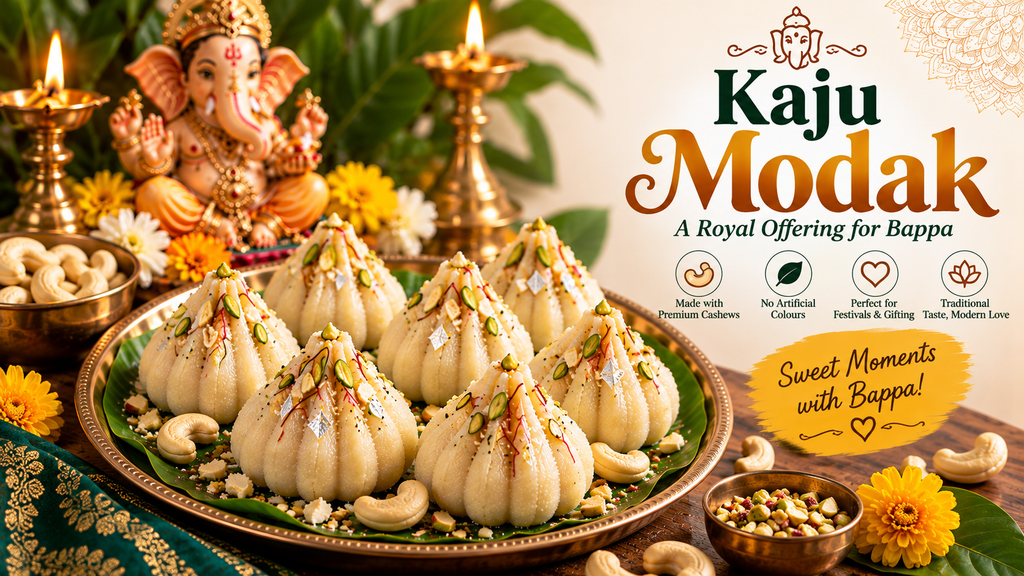
Basically kaju katli reshaped into a modak, made from cashew powder, sugar, water, and cardamom. If you’re already comfortable making kaju katli, this one’s completely straightforward.
Main ingredients: cashew powder, sugar, cardamom. Keeps: 4-5 days at room temperature.
10. Mango Modak
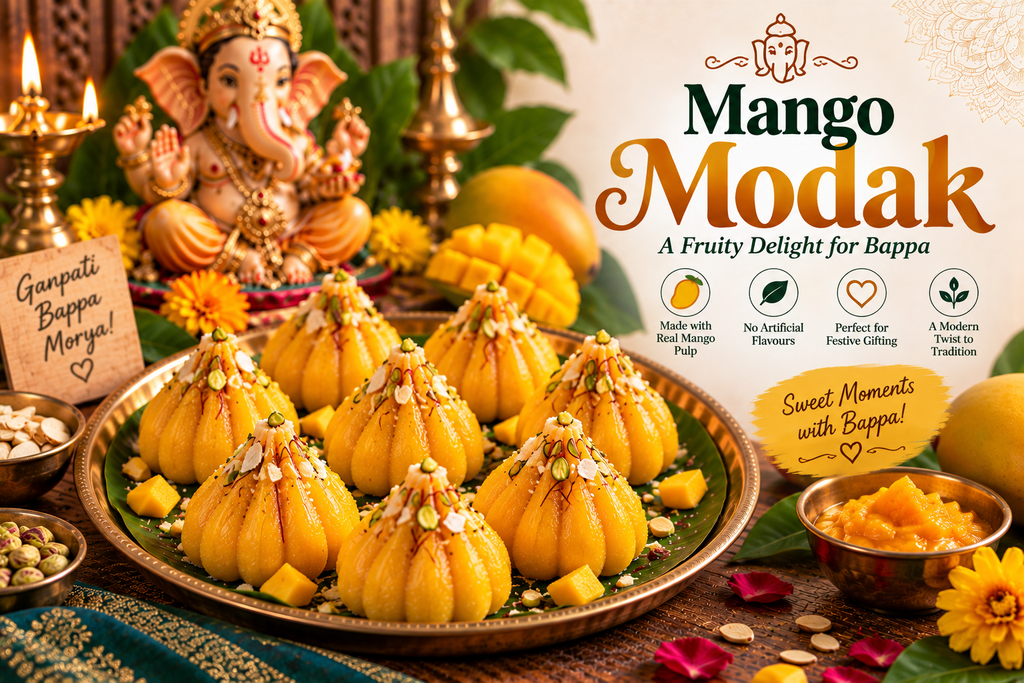
A quick, no-cook option built around ripe mango pulp and coconut. Pick naturally sweet, fully ripe mangoes so you don’t need to add much extra sugar.
Main ingredients: ripe mango pulp, desiccated coconut, sugar (optional). Keeps: 1-2 days refrigerated, since it uses fresh fruit.
11. Paneer Modak

A Bengali-influenced twist, crumbled paneer cooked with sugar and shaped like a modak instead of the usual sandesh form. Lighter and less sweet than the mawa-based versions.
Main ingredients: fresh paneer, sugar, cardamom. Keeps: 1-2 days refrigerated.
12. Oreo Modak
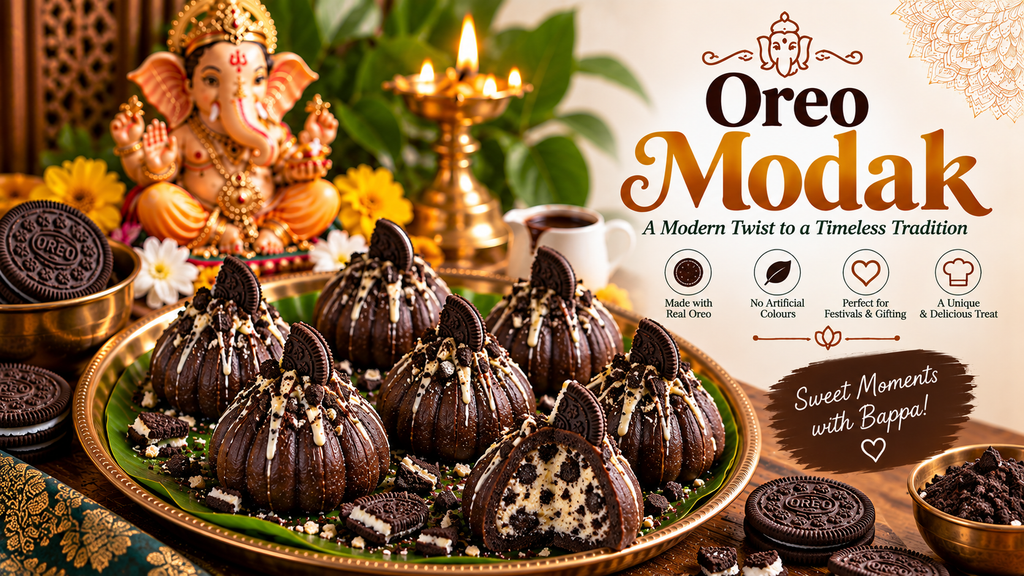
Crushed Oreo biscuits mixed with cream or condensed milk, set into a modak shape. Purely a kid-pleaser, and one of the quickest no-cook options if you’re short on time.
Main ingredients: Oreo biscuits, fresh cream or condensed milk. Keeps: 2-3 days refrigerated.
13. Paan Gulkand Modak
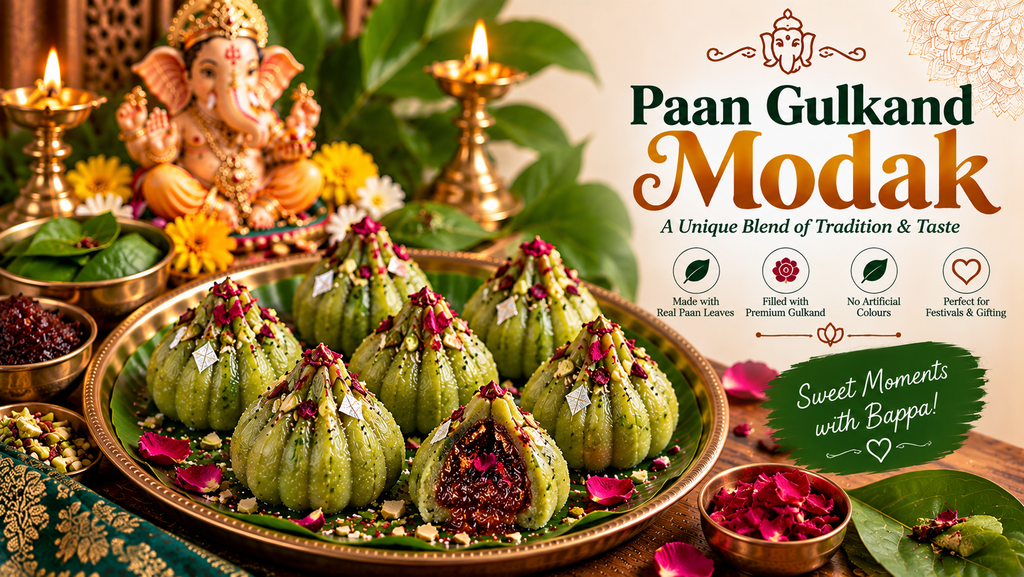
A more adventurous flavour that’s gained popularity in recent years, paan leaf and gulkand (rose petal preserve) mixed with pistachios and fennel seeds for a fresh, slightly tangy filling. Go easy on the gulkand, too much makes the filling overly moist and hard to shape.
Main ingredients: paan leaves, gulkand, pistachios, fennel seeds. Keeps: 1-2 days refrigerated.
14. Shahi Pista Modak
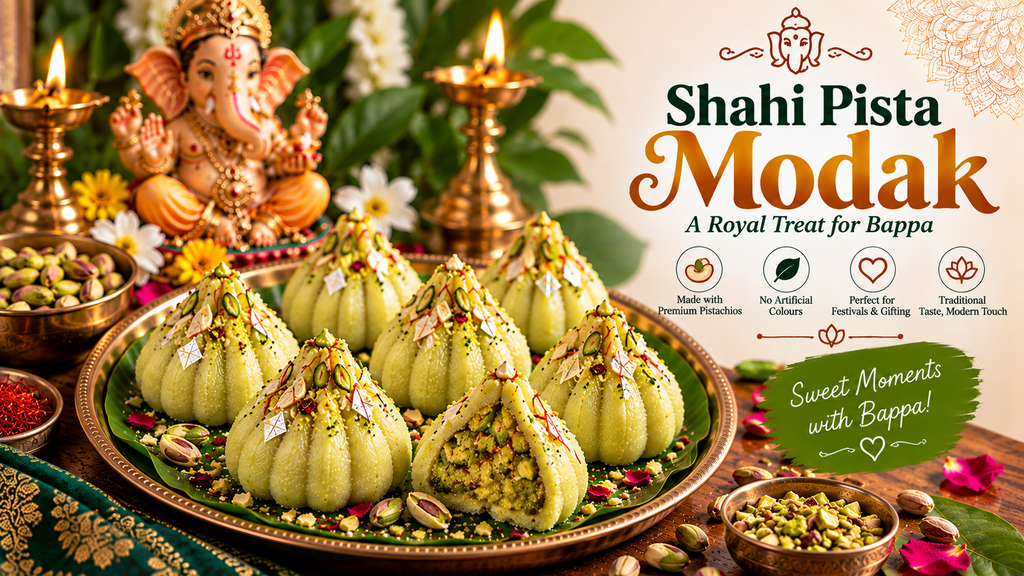
A rich, mawa-based modak loaded with pistachios, giving it a nutty flavour and a slightly grainy, luxurious texture. Popular for gifting because of how premium it looks and tastes.
Main ingredients: khoya, pistachios, sugar, cardamom. Keeps: 2-3 days refrigerated.
15. Coffee Cloud Modak
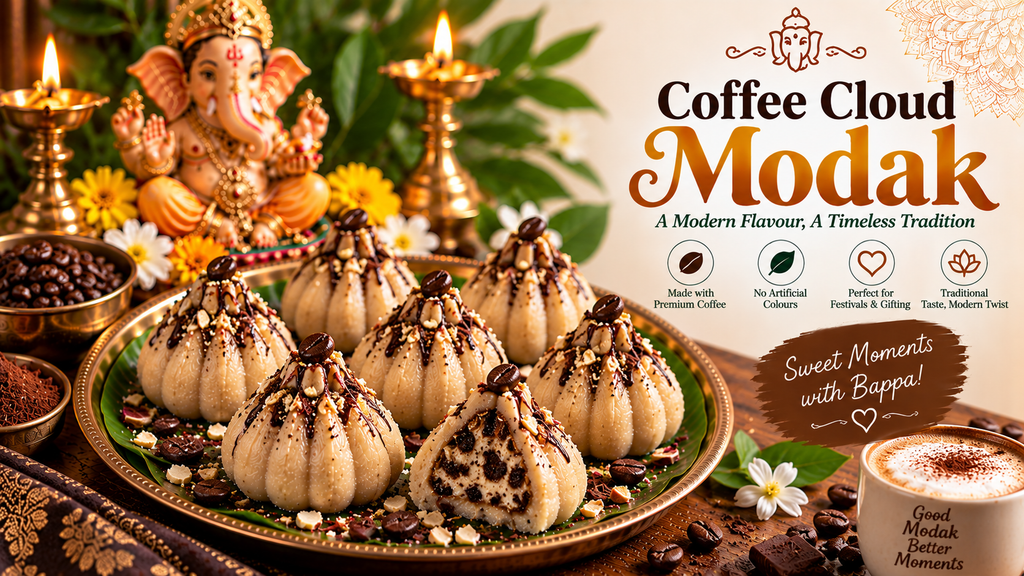
A newer, cream-based variation with a light coffee flavour running through it. It’s soft, almost mousse-like, and a good one to make close to serving time since cream-filled modaks don’t hold as well overnight.
Main ingredients: fresh cream, instant coffee, sugar. Keeps: 1 day refrigerated, best made fresh.
Storage Tips for Your Modak Platter
Since you’re likely making several varieties at once, it helps to know which ones need to be eaten quickly and which ones can be prepped in advance. As a rule of thumb, anything made with fresh cream, fresh fruit, or paneer (Coffee Cloud, Mango, Paneer, Paan Gulkand) should be made close to serving time and eaten within a day or two. Khoya-based modaks (Mawa, Kesar, Shahi Pista) hold up for 2-3 days in the fridge if kept in an airtight container. Fried and dry-fruit modaks are the most travel- and gift-friendly, they keep for 4-7 days at room temperature or refrigerated, which is why sweet shops and families making large batches for pandals tend to lean on these two the most.
A simple approach that works well: prepare your fried and dry-fruit modaks a day or two ahead, then make the fresh, cream, or fruit-based ones on the day you plan to serve them.
A Simple 15-Day Modak Plan
| Day | Modak Type |
|---|---|
| Day 1 (Installation) | Ukadiche Modak |
| Day 2 | Fried Modak |
| Day 3 | Nariyal Modak |
| Day 4 | Rava Modak |
| Day 5 | Dry Fruit Modak |
| Day 6 | Mawa Modak |
| Day 7 | Kesar Modak |
| Day 8 | Chocolate Modak |
| Day 9 | Kaju Modak |
| Day 10 | Mango Modak |
Making several varieties doesn’t mean fifteen separate recipes’ worth of effort. One batch of coconut-jaggery filling covers the steamed, fried, and nariyal versions, one mawa base covers kesar, shahi pista, and chocolate, and the no-cook ones (mango, Oreo, dry fruit) come together in minutes with just a food processor. For step-by-step measurements, Spice Up The Curry’s full modak recipe collection is a solid reference, and Swasthi’s Recipes has a helpful guide to shaping modaks with and without a mould, including troubleshooting for cracked or misshapen ones.
Frequently Asked Questions
Which modak is the most traditional?
Ukadiche Modak, the steamed rice-flour version with coconut-jaggery filling, is the most traditional and is closely associated with Maharashtrian Ganesh Chaturthi celebrations.
How many types of modak are there?
There isn’t a fixed number, but food bloggers and sweet shops commonly list anywhere from 10 to 21 popular varieties, split roughly between traditional coconut-jaggery based modaks and modern fusion flavours like chocolate, Oreo, and paan gulkand.
Why is modak offered to Lord Ganesha?
Modak is believed to be Lord Ganesha’s favourite sweet, which is why he’s also called Modakapriya, one of his 108 names. The first modak made is traditionally offered to him before the rest is shared as prasad.
Can modak be made without a mould?
Yes, traditional Ukadiche Modak can be shaped entirely by hand by pleating the dough, though it takes some practice. A mould just makes the process quicker and more consistent for beginners.
Why do my modaks crack while steaming?
Cracking usually happens because the dough is too dry, the filling is overstuffed, or the outer covering is too thin. Keeping the dough soft and not overfilling the shell usually solves it.
What is modak called in South India?
It’s called kozhukattai in Tamil Nadu, modakam in Andhra Pradesh and Telangana, and kudumu or kadubu in Karnataka. The core idea, a stuffed rice-flour dumpling, stays similar across all these regional versions.
Which modak varieties keep the longest?
Fried (Talniche) modak and dry fruit modak keep the longest, typically 4-7 days at room temperature or refrigerated, making them the best choice for gifting or making a few days ahead of the festival.
Ganpati Bappa Morya!
Whichever varieties you end up making this year, the effort is really what makes the festival special. Wishing you and your family a joyful Ganesh Chaturthi 2026. For more festive food and home ideas, check out our home and lifestyle guides.
1 thought on “15 Types of Modak to Make This Ganesh Chaturthi 2026 (Traditional + Fusion)”